...that we need others in our lives who appreciate us. It's all here in this post, and I'm thankful, that my life is going well right now, and that I have a friend who cares enough to let me know it:
http://bikewithjackie.blogspot.com/2007/06/hows-ride.html
And I need to shout out a big HAPPY BIRTHDAY TO RICK!
Showing posts with label self-help. Show all posts
Showing posts with label self-help. Show all posts
Wednesday, 1 October 2008

Saturday, 27 September 2008
Do you know what you're good at?
I was thinking about this very question (What am I good at?) at the meeting with the members of the Arizona Book Publishing Association this week. I'd been invited to speak to the group about blogging.
I arrived ready and prepared to speak. I was energized. I was excited. As I was distributing my hand-outs, a woman stopped me, "Jackie, do you remember me?"
Of course I did. It was Dee McVicker, a writer I know from my past life. She'd actually entered my subconscious mind a few weeks ago, though I can't recall why. So it was with great comfort that I saw her in person. She was a part of a writers' group called The Word Association I'd helped organize several years ago. We disbanded shortly after I became separated from my husband. For me, writing stopped, and I stopped going to the meetings, the same meetings that I had so carefully planned for so many months. It was my baby, and I was very proud of the work we'd accomplished. Through that group--it started out with four or five friends and grew to about 20 writers Valleywide--we were meeting editors, getting more assignments, and feeling more worthy of what we could contribute. I even managed to attract heavy duty guest speakers. It was a very satisfying effort. We never regrouped, however, and my interests changed and grew beyond just writing.
So I was happy that Dee sat near me during this meeting. We had a few moments to catch up. During our conversation, it occured to me that I'm very good at bringing people together and helping them find new opportunities. That's what I was doing at this meeting that night. This kind of empowerment very much relates to my work with the mental BIKE, and my travel, and now the blogging. I told her this. She agreed.
Today, after I wrote an article about organizing a blogathon that will be published in the ABPA newsletter, something else occured to me: my new 30-second commercial. I'm going to write it out for the first time right here:
"I'm Jackie Dishner. Whether through travel, blogging or my special brand of BIKE, I open your eyes to new opportunities."
That's what I do, and I'm proud of my work.
So, now I ask you: Do you know what you're good at, and do you take advantage of that in your personal and professional life?
Post a comment and let me know.
I arrived ready and prepared to speak. I was energized. I was excited. As I was distributing my hand-outs, a woman stopped me, "Jackie, do you remember me?"
Of course I did. It was Dee McVicker, a writer I know from my past life. She'd actually entered my subconscious mind a few weeks ago, though I can't recall why. So it was with great comfort that I saw her in person. She was a part of a writers' group called The Word Association I'd helped organize several years ago. We disbanded shortly after I became separated from my husband. For me, writing stopped, and I stopped going to the meetings, the same meetings that I had so carefully planned for so many months. It was my baby, and I was very proud of the work we'd accomplished. Through that group--it started out with four or five friends and grew to about 20 writers Valleywide--we were meeting editors, getting more assignments, and feeling more worthy of what we could contribute. I even managed to attract heavy duty guest speakers. It was a very satisfying effort. We never regrouped, however, and my interests changed and grew beyond just writing.
So I was happy that Dee sat near me during this meeting. We had a few moments to catch up. During our conversation, it occured to me that I'm very good at bringing people together and helping them find new opportunities. That's what I was doing at this meeting that night. This kind of empowerment very much relates to my work with the mental BIKE, and my travel, and now the blogging. I told her this. She agreed.
Today, after I wrote an article about organizing a blogathon that will be published in the ABPA newsletter, something else occured to me: my new 30-second commercial. I'm going to write it out for the first time right here:
"I'm Jackie Dishner. Whether through travel, blogging or my special brand of BIKE, I open your eyes to new opportunities."
That's what I do, and I'm proud of my work.
So, now I ask you: Do you know what you're good at, and do you take advantage of that in your personal and professional life?
Post a comment and let me know.
Friday, 18 July 2008
Favorite books for personal growth
This list represents books I've read once or twice, sometimes more. They helped me tremendously during my early mental--and physical--rides. They still do. And it's a lengthy list. Of course, it took me several years to read them and do the work that some require. But these are my favorites. I've read many, many more. But these, for me, touch on the important points of emotional, physical, spiritual, and even sexual growth. We're aiming for balance in all four areas of life.
Pick and choose what works for you. Create your own list. Add to this one. Substract from it. Let your Killer instincts--your most honest and tuned-in gut reaction--lead the way. But if you don't know where to start, here are several good bets:
A Gentle Path through the Twelve Steps (for all people in the process of recovery) by Patrick Carnes, Ph.D.
A Year by the Sea by Joan Anderson
Believe in the God Who Believes in You by Robert H. Schuller
Boundaries and Relationships by Charles L. Whitfield, M.D.
Callings: Finding and Following an Authentic Life by Gregg Levoy
Choices by Shad Helmstetter
Codependent No More by Melody Beattie
Don't Sweat the Small Stuff...and it's all small stuff by Richard Carlson, Ph.D.
Feel the Fear And Do it Anyway by Susan Jeffers, Ph.D.
Life Application Study Bible: New Living Translation
Man's Search for Meaning by Victor E. Frankl
The Artist's Way by Julia Cameron
The Four Agreements by Don Miguel Ruiz
The Power of Focus for Women by Fran Hewitt & Les Hewitt
The Purpose Driven Life by Rick Warren
The War of Art by Steven Pressfield
Pick and choose what works for you. Create your own list. Add to this one. Substract from it. Let your Killer instincts--your most honest and tuned-in gut reaction--lead the way. But if you don't know where to start, here are several good bets:
A Gentle Path through the Twelve Steps (for all people in the process of recovery) by Patrick Carnes, Ph.D.
A Year by the Sea by Joan Anderson
Believe in the God Who Believes in You by Robert H. Schuller
Boundaries and Relationships by Charles L. Whitfield, M.D.
Callings: Finding and Following an Authentic Life by Gregg Levoy
Choices by Shad Helmstetter
Codependent No More by Melody Beattie
Don't Sweat the Small Stuff...and it's all small stuff by Richard Carlson, Ph.D.
Feel the Fear And Do it Anyway by Susan Jeffers, Ph.D.
Life Application Study Bible: New Living Translation
Man's Search for Meaning by Victor E. Frankl
The Artist's Way by Julia Cameron
The Four Agreements by Don Miguel Ruiz
The Power of Focus for Women by Fran Hewitt & Les Hewitt
The Purpose Driven Life by Rick Warren
The War of Art by Steven Pressfield
Saturday, 23 February 2008
More about books...
The list of 12 books I mentioned in yesterday's post was just a small number of books I've read. I have an entire library full of books I read and continue to read during my recovery. For as long as I can remember, I've been drawn to self-help, self-improvement, and memoirs, for example. One of my first was the Rev. Robert H. Schuller's Tough Times Never Last But Tough People Do. The title says it all. There's a lot to learn from other people's challenges. Not to overwhelm my students, however, I kept their list down to 12. It's a start for them. If you'd like to know what my full list is, post a comment. I'd love to hear from you.
Thanks,
Jackie AKA The BIKE Lady
Thanks,
Jackie AKA The BIKE Lady
Monday, 1 October 2007
5 Ways to Calm Down in an Emergency or When Having a Panic Attack
5 Ways to Calm Down in an Emergency or When Having a Panic Attack
Sometimes, despite all our best efforts, we can suffer from the symptoms of panic or as they used to call it "bad nerves". The symptoms of panic can be:
* Rapid heart beat, pounding heart or palpitations
* Sweating
* Shaking visibly or inside
* Choking sensations or lump in throat
* Smothering or shortness of breath sensations
* Chest pain or discomfort
* Nausea, bloating, indigestion or abdominal discomfort
* Dizziness or unsteadiness
* Feeling light-headed
* Derealisation (feeling unreal or dreamy)
* Depersonalisation (feeling outside yourself or like you don't exist)
* Fear of losing control or going crazy
* Paresthesias (numbness or tingling sensations) in face, extremities or body
* Chills or hot flushes
* Skin losing colour
* Blushing or skin blotches
* Urgently needing to urinate or defecate
When you are panicking - the body releases adrenaline into your blood and this puts you on a high state of alert. Your fight or flight system triggers. The fight or flight system harkens back to the day when we were all living in caves and hunting for food. Perhaps we might get attacked by a saber tooth tiger and then we have a choice - we can either fight the beast or run away. In both cases we need a boost of adrenaline to help us fight or run. In today's culture, we don't get attacked by many saber tooth tigers but we do experience mental and emotional stress. This mental and emotional stress still triggers the fight or flight system except we usually don't do either. If the boss is giving you a hard time it wouldn't pay to start punching him in the head or running away!
When this panic reaction happens we need a little "first aid" to break the cycle of panic before ever addressing the cause of what brought you to feeling like this in the first place. If you are unable to break the cycle of panic and anxiety then this is classified as a panic disorder and you should seek medical help. Panic disorder is very common and it is not dangerous in itself although the symptoms can be extremely unpleasant. I could write pages on my experiences with Panic Disorder but I will leave that for another day but suffice to say I view panic attacks as your mind and body's way of telling you something about the way you think has to change.
So when you feel the symptoms of panic what can you do? Well here are five suggestions (that have worked for me) on how to calm down in an emergency:
1) Abdominal Breathing.
When you feel panic your breathing becomes faster and shallower. Abdominal breathing is the exact opposite of this and is the best way I have found to calm down. Place one hand on your chest and the other on your abdomen. When you take a deep breath in, the hand on the abdomen should rise higher than the one on the chest. This insures that the diaphragm is pulling air into the bases of the lungs. After exhaling through the mouth, take a slow deep breath in through your nose to the count of 5. Hold it for 3 seconds and then breath out to count of 5. Repeat this cycle until you feel you have calmed down.
2) Distract Yourself.
When you feel panic it is your thoughts that actually cause the panic. A cycle of scary thoughts but only thoughts. These thoughts trigger the fight or flight system in the body which triggers the symptoms of panic. What you could do when you are trapped in this cycle is distract yourself thus, breaking the cycle of thoughts. This can be done by picking up the phone and talking to someone, playing a video game, watching a favorite movie or TV show, going for a brisk walk, writing about your feelings in a journal - anything that will distract your mind from the panic thoughts.
3) Face/Accept, Float and let time pass.
This is the famous technique created by Dr. Claire Weekes on how to deal with being trapped in a cycle of panic. The more you "fight" your panic symptoms, the more adrenaline your body releases and the worse you will feel. Its like picking at wound - it just wont heal! So this technique is more about changing your attitude to the symptoms. You need to face and accept that because of the adrenaline in your system you will be feeling the symptoms of panic for the next while. In the mean time you need to carry out your daily activities while having the symptoms but the key here is to accept the symptoms not just "put up with them". The less you fight with yourself the more relaxed you will become. This brings us to floating. You can imagine yourself floating as you move and live with the symptoms. Relax yourself and go with the flow. Float don't fight! And finally you need to let time pass. Frayed nerves take time to heal and it doesn't pay to keep obsessing about how long you have been feeling this way. Live in the moment. If you are feeling panicky say to yourself "this is only adrenaline in my system and time will heal my frazzled nerves". For more on this technique please check out the book "Hope and Help for your Nerves" by Dr. Claire Weekes.
4) Do something physical.
This is not always possible and is similar to point number 2 in that you will be distracting yourself but it is still very important. Remember your system is full of adrenaline and so you need to burn this off. Your fight or flight system is triggered so we are not going to fight but we are going to take flight. Go for a brisk walk or run to burn off that adrenaline. Go and do some work in the garden. Do some of those chores you keep putting off. Do some housework, wash dishes - anything that will get you moving. I realize if you are taking an exam or test you can't just get up and run off - as much as you would like to - but you could apply one of the other techniques and then go and burn off the stress chemicals later. Exercise is important.
5) Comfort yourself.
While applying the other techniques also try and comfort yourself. Have a long hot soak in the bath, eat your favorite food, drink some warm milk. Don't drink alcohol this will put your body under more stress. Ask for a hug from someone you love, go for a long leisurely walk or a swim. Do something you enjoy that will bring a smile to your face and comfort your soul.
Know that in time these feelings will pass.
These symptoms are nothing more than feelings and feelings no matter how unpleasant cannot hurt you.
For more information check out these wonderful sites (they are still worth checking out even if you don't have panic DISORDER but just feel panicky).
Panic disorder at about .com
TAPIR: The Anxiety Panic Internet Resource
Good Luck,
Allen
Sometimes, despite all our best efforts, we can suffer from the symptoms of panic or as they used to call it "bad nerves". The symptoms of panic can be:
* Rapid heart beat, pounding heart or palpitations
* Sweating
* Shaking visibly or inside
* Choking sensations or lump in throat
* Smothering or shortness of breath sensations
* Chest pain or discomfort
* Nausea, bloating, indigestion or abdominal discomfort
* Dizziness or unsteadiness
* Feeling light-headed
* Derealisation (feeling unreal or dreamy)
* Depersonalisation (feeling outside yourself or like you don't exist)
* Fear of losing control or going crazy
* Paresthesias (numbness or tingling sensations) in face, extremities or body
* Chills or hot flushes
* Skin losing colour
* Blushing or skin blotches
* Urgently needing to urinate or defecate
When you are panicking - the body releases adrenaline into your blood and this puts you on a high state of alert. Your fight or flight system triggers. The fight or flight system harkens back to the day when we were all living in caves and hunting for food. Perhaps we might get attacked by a saber tooth tiger and then we have a choice - we can either fight the beast or run away. In both cases we need a boost of adrenaline to help us fight or run. In today's culture, we don't get attacked by many saber tooth tigers but we do experience mental and emotional stress. This mental and emotional stress still triggers the fight or flight system except we usually don't do either. If the boss is giving you a hard time it wouldn't pay to start punching him in the head or running away!
When this panic reaction happens we need a little "first aid" to break the cycle of panic before ever addressing the cause of what brought you to feeling like this in the first place. If you are unable to break the cycle of panic and anxiety then this is classified as a panic disorder and you should seek medical help. Panic disorder is very common and it is not dangerous in itself although the symptoms can be extremely unpleasant. I could write pages on my experiences with Panic Disorder but I will leave that for another day but suffice to say I view panic attacks as your mind and body's way of telling you something about the way you think has to change.
So when you feel the symptoms of panic what can you do? Well here are five suggestions (that have worked for me) on how to calm down in an emergency:
1) Abdominal Breathing.
When you feel panic your breathing becomes faster and shallower. Abdominal breathing is the exact opposite of this and is the best way I have found to calm down. Place one hand on your chest and the other on your abdomen. When you take a deep breath in, the hand on the abdomen should rise higher than the one on the chest. This insures that the diaphragm is pulling air into the bases of the lungs. After exhaling through the mouth, take a slow deep breath in through your nose to the count of 5. Hold it for 3 seconds and then breath out to count of 5. Repeat this cycle until you feel you have calmed down.
2) Distract Yourself.
When you feel panic it is your thoughts that actually cause the panic. A cycle of scary thoughts but only thoughts. These thoughts trigger the fight or flight system in the body which triggers the symptoms of panic. What you could do when you are trapped in this cycle is distract yourself thus, breaking the cycle of thoughts. This can be done by picking up the phone and talking to someone, playing a video game, watching a favorite movie or TV show, going for a brisk walk, writing about your feelings in a journal - anything that will distract your mind from the panic thoughts.
3) Face/Accept, Float and let time pass.
This is the famous technique created by Dr. Claire Weekes on how to deal with being trapped in a cycle of panic. The more you "fight" your panic symptoms, the more adrenaline your body releases and the worse you will feel. Its like picking at wound - it just wont heal! So this technique is more about changing your attitude to the symptoms. You need to face and accept that because of the adrenaline in your system you will be feeling the symptoms of panic for the next while. In the mean time you need to carry out your daily activities while having the symptoms but the key here is to accept the symptoms not just "put up with them". The less you fight with yourself the more relaxed you will become. This brings us to floating. You can imagine yourself floating as you move and live with the symptoms. Relax yourself and go with the flow. Float don't fight! And finally you need to let time pass. Frayed nerves take time to heal and it doesn't pay to keep obsessing about how long you have been feeling this way. Live in the moment. If you are feeling panicky say to yourself "this is only adrenaline in my system and time will heal my frazzled nerves". For more on this technique please check out the book "Hope and Help for your Nerves" by Dr. Claire Weekes.
4) Do something physical.
This is not always possible and is similar to point number 2 in that you will be distracting yourself but it is still very important. Remember your system is full of adrenaline and so you need to burn this off. Your fight or flight system is triggered so we are not going to fight but we are going to take flight. Go for a brisk walk or run to burn off that adrenaline. Go and do some work in the garden. Do some of those chores you keep putting off. Do some housework, wash dishes - anything that will get you moving. I realize if you are taking an exam or test you can't just get up and run off - as much as you would like to - but you could apply one of the other techniques and then go and burn off the stress chemicals later. Exercise is important.
5) Comfort yourself.
While applying the other techniques also try and comfort yourself. Have a long hot soak in the bath, eat your favorite food, drink some warm milk. Don't drink alcohol this will put your body under more stress. Ask for a hug from someone you love, go for a long leisurely walk or a swim. Do something you enjoy that will bring a smile to your face and comfort your soul.
Know that in time these feelings will pass.
These symptoms are nothing more than feelings and feelings no matter how unpleasant cannot hurt you.
For more information check out these wonderful sites (they are still worth checking out even if you don't have panic DISORDER but just feel panicky).
Panic disorder at about .com
TAPIR: The Anxiety Panic Internet Resource
Good Luck,
Allen
5 Ways to Calm Down in an Emergency or When Having a Panic Attack
5 Ways to Calm Down in an Emergency or When Having a Panic Attack
Sometimes, despite all our best efforts, we can suffer from the symptoms of panic or as they used to call it "bad nerves". The symptoms of panic can be:
* Rapid heart beat, pounding heart or palpitations
* Sweating
* Shaking visibly or inside
* Choking sensations or lump in throat
* Smothering or shortness of breath sensations
* Chest pain or discomfort
* Nausea, bloating, indigestion or abdominal discomfort
* Dizziness or unsteadiness
* Feeling light-headed
* Derealisation (feeling unreal or dreamy)
* Depersonalisation (feeling outside yourself or like you don't exist)
* Fear of losing control or going crazy
* Paresthesias (numbness or tingling sensations) in face, extremities or body
* Chills or hot flushes
* Skin losing colour
* Blushing or skin blotches
* Urgently needing to urinate or defecate
When you are panicking - the body releases adrenaline into your blood and this puts you on a high state of alert. Your fight or flight system triggers. The fight or flight system harkens back to the day when we were all living in caves and hunting for food. Perhaps we might get attacked by a saber tooth tiger and then we have a choice - we can either fight the beast or run away. In both cases we need a boost of adrenaline to help us fight or run. In today's culture, we don't get attacked by many saber tooth tigers but we do experience mental and emotional stress. This mental and emotional stress still triggers the fight or flight system except we usually don't do either. If the boss is giving you a hard time it wouldn't pay to start punching him in the head or running away!
When this panic reaction happens we need a little "first aid" to break the cycle of panic before ever addressing the cause of what brought you to feeling like this in the first place. If you are unable to break the cycle of panic and anxiety then this is classified as a panic disorder and you should seek medical help. Panic disorder is very common and it is not dangerous in itself although the symptoms can be extremely unpleasant. I could write pages on my experiences with Panic Disorder but I will leave that for another day but suffice to say I view panic attacks as your mind and body's way of telling you something about the way you think has to change.
So when you feel the symptoms of panic what can you do? Well here are five suggestions (that have worked for me) on how to calm down in an emergency:
1) Abdominal Breathing.
When you feel panic your breathing becomes faster and shallower. Abdominal breathing is the exact opposite of this and is the best way I have found to calm down. Place one hand on your chest and the other on your abdomen. When you take a deep breath in, the hand on the abdomen should rise higher than the one on the chest. This insures that the diaphragm is pulling air into the bases of the lungs. After exhaling through the mouth, take a slow deep breath in through your nose to the count of 5. Hold it for 3 seconds and then breath out to count of 5. Repeat this cycle until you feel you have calmed down.
2) Distract Yourself.
When you feel panic it is your thoughts that actually cause the panic. A cycle of scary thoughts but only thoughts. These thoughts trigger the fight or flight system in the body which triggers the symptoms of panic. What you could do when you are trapped in this cycle is distract yourself thus, breaking the cycle of thoughts. This can be done by picking up the phone and talking to someone, playing a video game, watching a favorite movie or TV show, going for a brisk walk, writing about your feelings in a journal - anything that will distract your mind from the panic thoughts.
3) Face/Accept, Float and let time pass.
This is the famous technique created by Dr. Claire Weekes on how to deal with being trapped in a cycle of panic. The more you "fight" your panic symptoms, the more adrenaline your body releases and the worse you will feel. Its like picking at wound - it just wont heal! So this technique is more about changing your attitude to the symptoms. You need to face and accept that because of the adrenaline in your system you will be feeling the symptoms of panic for the next while. In the mean time you need to carry out your daily activities while having the symptoms but the key here is to accept the symptoms not just "put up with them". The less you fight with yourself the more relaxed you will become. This brings us to floating. You can imagine yourself floating as you move and live with the symptoms. Relax yourself and go with the flow. Float don't fight! And finally you need to let time pass. Frayed nerves take time to heal and it doesn't pay to keep obsessing about how long you have been feeling this way. Live in the moment. If you are feeling panicky say to yourself "this is only adrenaline in my system and time will heal my frazzled nerves". For more on this technique please check out the book "Hope and Help for your Nerves" by Dr. Claire Weekes.
4) Do something physical.
This is not always possible and is similar to point number 2 in that you will be distracting yourself but it is still very important. Remember your system is full of adrenaline and so you need to burn this off. Your fight or flight system is triggered so we are not going to fight but we are going to take flight. Go for a brisk walk or run to burn off that adrenaline. Go and do some work in the garden. Do some of those chores you keep putting off. Do some housework, wash dishes - anything that will get you moving. I realize if you are taking an exam or test you can't just get up and run off - as much as you would like to - but you could apply one of the other techniques and then go and burn off the stress chemicals later. Exercise is important.
5) Comfort yourself.
While applying the other techniques also try and comfort yourself. Have a long hot soak in the bath, eat your favorite food, drink some warm milk. Don't drink alcohol this will put your body under more stress. Ask for a hug from someone you love, go for a long leisurely walk or a swim. Do something you enjoy that will bring a smile to your face and comfort your soul.
Know that in time these feelings will pass.
These symptoms are nothing more than feelings and feelings no matter how unpleasant cannot hurt you.
For more information check out these wonderful sites (they are still worth checking out even if you don't have panic DISORDER but just feel panicky).
Panic disorder at about .com
TAPIR: The Anxiety Panic Internet Resource
Good Luck,
Allen
Sometimes, despite all our best efforts, we can suffer from the symptoms of panic or as they used to call it "bad nerves". The symptoms of panic can be:
* Rapid heart beat, pounding heart or palpitations
* Sweating
* Shaking visibly or inside
* Choking sensations or lump in throat
* Smothering or shortness of breath sensations
* Chest pain or discomfort
* Nausea, bloating, indigestion or abdominal discomfort
* Dizziness or unsteadiness
* Feeling light-headed
* Derealisation (feeling unreal or dreamy)
* Depersonalisation (feeling outside yourself or like you don't exist)
* Fear of losing control or going crazy
* Paresthesias (numbness or tingling sensations) in face, extremities or body
* Chills or hot flushes
* Skin losing colour
* Blushing or skin blotches
* Urgently needing to urinate or defecate
When you are panicking - the body releases adrenaline into your blood and this puts you on a high state of alert. Your fight or flight system triggers. The fight or flight system harkens back to the day when we were all living in caves and hunting for food. Perhaps we might get attacked by a saber tooth tiger and then we have a choice - we can either fight the beast or run away. In both cases we need a boost of adrenaline to help us fight or run. In today's culture, we don't get attacked by many saber tooth tigers but we do experience mental and emotional stress. This mental and emotional stress still triggers the fight or flight system except we usually don't do either. If the boss is giving you a hard time it wouldn't pay to start punching him in the head or running away!
When this panic reaction happens we need a little "first aid" to break the cycle of panic before ever addressing the cause of what brought you to feeling like this in the first place. If you are unable to break the cycle of panic and anxiety then this is classified as a panic disorder and you should seek medical help. Panic disorder is very common and it is not dangerous in itself although the symptoms can be extremely unpleasant. I could write pages on my experiences with Panic Disorder but I will leave that for another day but suffice to say I view panic attacks as your mind and body's way of telling you something about the way you think has to change.
So when you feel the symptoms of panic what can you do? Well here are five suggestions (that have worked for me) on how to calm down in an emergency:
1) Abdominal Breathing.
When you feel panic your breathing becomes faster and shallower. Abdominal breathing is the exact opposite of this and is the best way I have found to calm down. Place one hand on your chest and the other on your abdomen. When you take a deep breath in, the hand on the abdomen should rise higher than the one on the chest. This insures that the diaphragm is pulling air into the bases of the lungs. After exhaling through the mouth, take a slow deep breath in through your nose to the count of 5. Hold it for 3 seconds and then breath out to count of 5. Repeat this cycle until you feel you have calmed down.
2) Distract Yourself.
When you feel panic it is your thoughts that actually cause the panic. A cycle of scary thoughts but only thoughts. These thoughts trigger the fight or flight system in the body which triggers the symptoms of panic. What you could do when you are trapped in this cycle is distract yourself thus, breaking the cycle of thoughts. This can be done by picking up the phone and talking to someone, playing a video game, watching a favorite movie or TV show, going for a brisk walk, writing about your feelings in a journal - anything that will distract your mind from the panic thoughts.
3) Face/Accept, Float and let time pass.
This is the famous technique created by Dr. Claire Weekes on how to deal with being trapped in a cycle of panic. The more you "fight" your panic symptoms, the more adrenaline your body releases and the worse you will feel. Its like picking at wound - it just wont heal! So this technique is more about changing your attitude to the symptoms. You need to face and accept that because of the adrenaline in your system you will be feeling the symptoms of panic for the next while. In the mean time you need to carry out your daily activities while having the symptoms but the key here is to accept the symptoms not just "put up with them". The less you fight with yourself the more relaxed you will become. This brings us to floating. You can imagine yourself floating as you move and live with the symptoms. Relax yourself and go with the flow. Float don't fight! And finally you need to let time pass. Frayed nerves take time to heal and it doesn't pay to keep obsessing about how long you have been feeling this way. Live in the moment. If you are feeling panicky say to yourself "this is only adrenaline in my system and time will heal my frazzled nerves". For more on this technique please check out the book "Hope and Help for your Nerves" by Dr. Claire Weekes.
4) Do something physical.
This is not always possible and is similar to point number 2 in that you will be distracting yourself but it is still very important. Remember your system is full of adrenaline and so you need to burn this off. Your fight or flight system is triggered so we are not going to fight but we are going to take flight. Go for a brisk walk or run to burn off that adrenaline. Go and do some work in the garden. Do some of those chores you keep putting off. Do some housework, wash dishes - anything that will get you moving. I realize if you are taking an exam or test you can't just get up and run off - as much as you would like to - but you could apply one of the other techniques and then go and burn off the stress chemicals later. Exercise is important.
5) Comfort yourself.
While applying the other techniques also try and comfort yourself. Have a long hot soak in the bath, eat your favorite food, drink some warm milk. Don't drink alcohol this will put your body under more stress. Ask for a hug from someone you love, go for a long leisurely walk or a swim. Do something you enjoy that will bring a smile to your face and comfort your soul.
Know that in time these feelings will pass.
These symptoms are nothing more than feelings and feelings no matter how unpleasant cannot hurt you.
For more information check out these wonderful sites (they are still worth checking out even if you don't have panic DISORDER but just feel panicky).
Panic disorder at about .com
TAPIR: The Anxiety Panic Internet Resource
Good Luck,
Allen
Tuesday, 7 August 2007
Self Help For Lazy People - Revisited
Hi there,
This is the post that kicked off this site and I felt (since it is one year later) it would be time for a re-run. If the television networks can have summer re-runs I don't see why I cant either :-) ...
Let me know what you think .. one year later?
Allen

Photo By N. Ireland Wallpapers / Desktop Backgrounds
There is a common thread to all self help books. Instead of having to fork out hard earned cash to hear the same message again and again - why not just follow the tips listed below and it will save you time and money. I have called this post "Self Help and Personal Development for Lazy People".
1) Relax - This doesn't mean to zombie out in front of the television. This means taking 10-20 minutes of your day to do NOTHING. There are various ways in which you can relax.
a) Meditation.
b) Progressive Muscle Relaxation.
c) Deep breathing.
d) Yoga.
You will find if you do this on a regular basis that you will be less susceptible to the symptoms of bad stress and you will not be as tired.
2) Take regular physical exercise - It doesn’t have to be anything special - a daily 20 minute walk would be enough and if you feel like doing more you will. Start with small amounts of enjoyable exercise. Don't be going off all gung ho.
3) Eat a balanced diet. There has been so much written on this. I think you know what you should eat more off and what you should cut down on.
4) Sleep well - Go to bed and get up at the same time everyday. Listen to your body - everyone needs different amounts of sleep. You know what the right amount is for you. If you have a television in your bedroom - get rid of it! The bedroom should be used for two things and one of them is sleeping. See your sleep as an investment in order to feel better during the day.
5) Socialize - Spend time with family and friends on a regular basis. Try not to isolate yourself.
6) Keep a journal - These are great places to express your feelings, review what happened during the day and solve problems. Get your problems out of your head and onto paper and you will feel less overwhelmed by them.
7) Help other people - It’s simple. You help others - they will feel good and you will feel good. The world will be a better place if we all did this.
8) Keep close to nature - Go for walks in the country, do some gardening and basically anything that will remind you that there is more to this earth than us!
9) Develop a spiritual life - Christianity, Buddhism, Islam, Hinduism - whatever is your thing.
10) Laugh - Keep a sense of humor about life! In a hundred years you will be dead so lighten up and enjoy it.
11) Watch less T.V. - There are a few programs I really like. I usually tape them so I can choose when to watch them. Watching less T.V. will free so much of your time up to go and do so many other things. I get my news from listening to the radio or the internet. Again you don’t have to cut it out all together but you have to ask yourself – does anyone benefit from watching Big Brother?
12) Listen – If you give someone who is talking to you 100% of your attention you will feel more relaxed and responsive to that person. Your mind will not be rushing on to the next thing that needs to be done and the person who is talking to you will respond warmly to your attention.
13) De-clutter your life - Strive for a minimalistic life style. What do you want with all the stuff? How many little dust collectors do you have that you can get rid off? Stop listening to all those ads. If you buy THAT it will NOT make you happy. Keep things simple!
14) Get organized - Manage your time better at work prioritize your tasks. Stop procrastinating. Keep your home clean and well organized. You will feel better and less frustrated. Time is a precious quantity - look after it.
Finally ..
15) Think for yourself - You don’t have to blindly follow people and do what everyone else is doing. You don’t have to follow the culture in which you live if you don’t agree with it. You are your own unique and special individual. You are not to be classified or labeled! You are YOU! No other person has ever existed – quite like you. No other person will ever exist again like you. Listen to your feelings more and think for yourself. Do not blindly accept things just because other people do. Be true to yourself and you will be more fully human and in the end happier.
I hope you find this post useful… If you follow the tips above, I can guarantee you will feel better.
Good Luck,
Allen
If you liked this you might like to read:
How to Stop Obsessive Worry for Lazy People
50 Self Nuturing Activities for Lazy People
p.s. More posts along this topic will follow soon including ...
How To Get Exercise and Avoid The Gym for Lazy People and
How to be Assertive for Lazy People.
Click here for professional e-commerce and website development.
This is the post that kicked off this site and I felt (since it is one year later) it would be time for a re-run. If the television networks can have summer re-runs I don't see why I cant either :-) ...
Let me know what you think .. one year later?
Allen

Photo By N. Ireland Wallpapers / Desktop Backgrounds
There is a common thread to all self help books. Instead of having to fork out hard earned cash to hear the same message again and again - why not just follow the tips listed below and it will save you time and money. I have called this post "Self Help and Personal Development for Lazy People".
1) Relax - This doesn't mean to zombie out in front of the television. This means taking 10-20 minutes of your day to do NOTHING. There are various ways in which you can relax.
a) Meditation.
b) Progressive Muscle Relaxation.
c) Deep breathing.
d) Yoga.
You will find if you do this on a regular basis that you will be less susceptible to the symptoms of bad stress and you will not be as tired.
2) Take regular physical exercise - It doesn’t have to be anything special - a daily 20 minute walk would be enough and if you feel like doing more you will. Start with small amounts of enjoyable exercise. Don't be going off all gung ho.
3) Eat a balanced diet. There has been so much written on this. I think you know what you should eat more off and what you should cut down on.
4) Sleep well - Go to bed and get up at the same time everyday. Listen to your body - everyone needs different amounts of sleep. You know what the right amount is for you. If you have a television in your bedroom - get rid of it! The bedroom should be used for two things and one of them is sleeping. See your sleep as an investment in order to feel better during the day.
5) Socialize - Spend time with family and friends on a regular basis. Try not to isolate yourself.
6) Keep a journal - These are great places to express your feelings, review what happened during the day and solve problems. Get your problems out of your head and onto paper and you will feel less overwhelmed by them.
7) Help other people - It’s simple. You help others - they will feel good and you will feel good. The world will be a better place if we all did this.
8) Keep close to nature - Go for walks in the country, do some gardening and basically anything that will remind you that there is more to this earth than us!
9) Develop a spiritual life - Christianity, Buddhism, Islam, Hinduism - whatever is your thing.
10) Laugh - Keep a sense of humor about life! In a hundred years you will be dead so lighten up and enjoy it.
11) Watch less T.V. - There are a few programs I really like. I usually tape them so I can choose when to watch them. Watching less T.V. will free so much of your time up to go and do so many other things. I get my news from listening to the radio or the internet. Again you don’t have to cut it out all together but you have to ask yourself – does anyone benefit from watching Big Brother?
12) Listen – If you give someone who is talking to you 100% of your attention you will feel more relaxed and responsive to that person. Your mind will not be rushing on to the next thing that needs to be done and the person who is talking to you will respond warmly to your attention.
13) De-clutter your life - Strive for a minimalistic life style. What do you want with all the stuff? How many little dust collectors do you have that you can get rid off? Stop listening to all those ads. If you buy THAT it will NOT make you happy. Keep things simple!
14) Get organized - Manage your time better at work prioritize your tasks. Stop procrastinating. Keep your home clean and well organized. You will feel better and less frustrated. Time is a precious quantity - look after it.
Finally ..
15) Think for yourself - You don’t have to blindly follow people and do what everyone else is doing. You don’t have to follow the culture in which you live if you don’t agree with it. You are your own unique and special individual. You are not to be classified or labeled! You are YOU! No other person has ever existed – quite like you. No other person will ever exist again like you. Listen to your feelings more and think for yourself. Do not blindly accept things just because other people do. Be true to yourself and you will be more fully human and in the end happier.
I hope you find this post useful… If you follow the tips above, I can guarantee you will feel better.
Good Luck,
Allen
If you liked this you might like to read:
How to Stop Obsessive Worry for Lazy People
50 Self Nuturing Activities for Lazy People
p.s. More posts along this topic will follow soon including ...
How To Get Exercise and Avoid The Gym for Lazy People and
How to be Assertive for Lazy People.
Self Help For Lazy People - Revisited
Hi there,
This is the post that kicked off this site and I felt (since it is one year later) it would be time for a re-run. If the television networks can have summer re-runs I don't see why I cant either :-) ...
Let me know what you think .. one year later?
Allen
Photo By N. Ireland Wallpapers / Desktop Backgrounds
There is a common thread to all self help books. Instead of having to fork out hard earned cash to hear the same message again and again - why not just follow the tips listed below and it will save you time and money. I have called this post "Self Help and Personal Development for Lazy People".
1) Relax - This doesn't mean to zombie out in front of the television. This means taking 10-20 minutes of your day to do NOTHING. There are various ways in which you can relax.
a) Meditation.
b) Progressive Muscle Relaxation.
c) Deep breathing.
d) Yoga.
You will find if you do this on a regular basis that you will be less susceptible to the symptoms of bad stress and you will not be as tired.
2) Take regular physical exercise - It doesn’t have to be anything special - a daily 20 minute walk would be enough and if you feel like doing more you will. Start with small amounts of enjoyable exercise. Don't be going off all gung ho.
3) Eat a balanced diet. There has been so much written on this. I think you know what you should eat more off and what you should cut down on.
4) Sleep well - Go to bed and get up at the same time everyday. Listen to your body - everyone needs different amounts of sleep. You know what the right amount is for you. If you have a television in your bedroom - get rid of it! The bedroom should be used for two things and one of them is sleeping. See your sleep as an investment in order to feel better during the day.
5) Socialize - Spend time with family and friends on a regular basis. Try not to isolate yourself.
6) Keep a journal - These are great places to express your feelings, review what happened during the day and solve problems. Get your problems out of your head and onto paper and you will feel less overwhelmed by them.
7) Help other people - It’s simple. You help others - they will feel good and you will feel good. The world will be a better place if we all did this.
8) Keep close to nature - Go for walks in the country, do some gardening and basically anything that will remind you that there is more to this earth than us!
9) Develop a spiritual life - Christianity, Buddhism, Islam, Hinduism - whatever is your thing.
10) Laugh - Keep a sense of humor about life! In a hundred years you will be dead so lighten up and enjoy it.
11) Watch less T.V. - There are a few programs I really like. I usually tape them so I can choose when to watch them. Watching less T.V. will free so much of your time up to go and do so many other things. I get my news from listening to the radio or the internet. Again you don’t have to cut it out all together but you have to ask yourself – does anyone benefit from watching Big Brother?
12) Listen – If you give someone who is talking to you 100% of your attention you will feel more relaxed and responsive to that person. Your mind will not be rushing on to the next thing that needs to be done and the person who is talking to you will respond warmly to your attention.
13) De-clutter your life - Strive for a minimalistic life style. What do you want with all the stuff? How many little dust collectors do you have that you can get rid off? Stop listening to all those ads. If you buy THAT it will NOT make you happy. Keep things simple!
14) Get organized - Manage your time better at work prioritize your tasks. Stop procrastinating. Keep your home clean and well organized. You will feel better and less frustrated. Time is a precious quantity - look after it.
Finally ..
15) Think for yourself - You don’t have to blindly follow people and do what everyone else is doing. You don’t have to follow the culture in which you live if you don’t agree with it. You are your own unique and special individual. You are not to be classified or labeled! You are YOU! No other person has ever existed – quite like you. No other person will ever exist again like you. Listen to your feelings more and think for yourself. Do not blindly accept things just because other people do. Be true to yourself and you will be more fully human and in the end happier.
I hope you find this post useful… If you follow the tips above, I can guarantee you will feel better.
Good Luck,
Allen
If you liked this you might like to read:
How to Stop Obsessive Worry for Lazy People
50 Self Nuturing Activities for Lazy People
p.s. More posts along this topic will follow soon including ...
How To Get Exercise and Avoid The Gym for Lazy People and
How to be Assertive for Lazy People.
Click here for professional e-commerce and website development.
This is the post that kicked off this site and I felt (since it is one year later) it would be time for a re-run. If the television networks can have summer re-runs I don't see why I cant either :-) ...
Let me know what you think .. one year later?
Allen
Photo By N. Ireland Wallpapers / Desktop Backgrounds
There is a common thread to all self help books. Instead of having to fork out hard earned cash to hear the same message again and again - why not just follow the tips listed below and it will save you time and money. I have called this post "Self Help and Personal Development for Lazy People".
1) Relax - This doesn't mean to zombie out in front of the television. This means taking 10-20 minutes of your day to do NOTHING. There are various ways in which you can relax.
a) Meditation.
b) Progressive Muscle Relaxation.
c) Deep breathing.
d) Yoga.
You will find if you do this on a regular basis that you will be less susceptible to the symptoms of bad stress and you will not be as tired.
2) Take regular physical exercise - It doesn’t have to be anything special - a daily 20 minute walk would be enough and if you feel like doing more you will. Start with small amounts of enjoyable exercise. Don't be going off all gung ho.
3) Eat a balanced diet. There has been so much written on this. I think you know what you should eat more off and what you should cut down on.
4) Sleep well - Go to bed and get up at the same time everyday. Listen to your body - everyone needs different amounts of sleep. You know what the right amount is for you. If you have a television in your bedroom - get rid of it! The bedroom should be used for two things and one of them is sleeping. See your sleep as an investment in order to feel better during the day.
5) Socialize - Spend time with family and friends on a regular basis. Try not to isolate yourself.
6) Keep a journal - These are great places to express your feelings, review what happened during the day and solve problems. Get your problems out of your head and onto paper and you will feel less overwhelmed by them.
7) Help other people - It’s simple. You help others - they will feel good and you will feel good. The world will be a better place if we all did this.
8) Keep close to nature - Go for walks in the country, do some gardening and basically anything that will remind you that there is more to this earth than us!
9) Develop a spiritual life - Christianity, Buddhism, Islam, Hinduism - whatever is your thing.
10) Laugh - Keep a sense of humor about life! In a hundred years you will be dead so lighten up and enjoy it.
11) Watch less T.V. - There are a few programs I really like. I usually tape them so I can choose when to watch them. Watching less T.V. will free so much of your time up to go and do so many other things. I get my news from listening to the radio or the internet. Again you don’t have to cut it out all together but you have to ask yourself – does anyone benefit from watching Big Brother?
12) Listen – If you give someone who is talking to you 100% of your attention you will feel more relaxed and responsive to that person. Your mind will not be rushing on to the next thing that needs to be done and the person who is talking to you will respond warmly to your attention.
13) De-clutter your life - Strive for a minimalistic life style. What do you want with all the stuff? How many little dust collectors do you have that you can get rid off? Stop listening to all those ads. If you buy THAT it will NOT make you happy. Keep things simple!
14) Get organized - Manage your time better at work prioritize your tasks. Stop procrastinating. Keep your home clean and well organized. You will feel better and less frustrated. Time is a precious quantity - look after it.
Finally ..
15) Think for yourself - You don’t have to blindly follow people and do what everyone else is doing. You don’t have to follow the culture in which you live if you don’t agree with it. You are your own unique and special individual. You are not to be classified or labeled! You are YOU! No other person has ever existed – quite like you. No other person will ever exist again like you. Listen to your feelings more and think for yourself. Do not blindly accept things just because other people do. Be true to yourself and you will be more fully human and in the end happier.
I hope you find this post useful… If you follow the tips above, I can guarantee you will feel better.
Good Luck,
Allen
If you liked this you might like to read:
How to Stop Obsessive Worry for Lazy People
50 Self Nuturing Activities for Lazy People
p.s. More posts along this topic will follow soon including ...
How To Get Exercise and Avoid The Gym for Lazy People and
How to be Assertive for Lazy People.
Monday, 11 June 2007
Remember - Your Words Are Like Arrows...
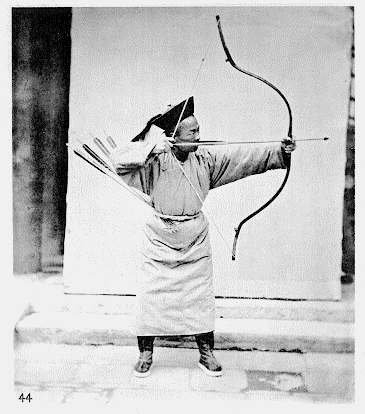 When you are having a disagreement with a family member or friend its very easy to say something that YOU know will hurt them. Its like a weapon you use.
 You don't REALLY mean it but you know that it will get to them.
You lash out.
Your hurt them.
I would compare letting these hurtful words loose to firing an arrow at the person. You can't take the words back - once you've shot them That's it. Its too late.
The arrow remains in the person causing pain.
You can't take it back once you have loosed the arrow.
Be careful in what you say to people you love. Think of your words like arrows. You can't take them back and undo the hurt they have caused. With this in mind you might not be so quick to lash out.
Remember - Your Words Are Like Arrows...
When you are having a disagreement with a family member or friend its very easy to say something that YOU know will hurt them. Its like a weapon you use. You don't REALLY mean it but you know that it will get to them.
You lash out.
Your hurt them.
I would compare letting these hurtful words loose to firing an arrow at the person. You can't take the words back - once you've shot them That's it. Its too late.
The arrow remains in the person causing pain.
You can't take it back once you have loosed the arrow.
Be careful in what you say to people you love. Think of your words like arrows. You can't take them back and undo the hurt they have caused. With this in mind you might not be so quick to lash out.
Tuesday, 10 April 2007
5 Tips on How to Manage Change in Your Life
5 Tips on How to Manage Change in Your Life

Photo By N. Ireland Wallpapers / Desktop Backgrounds
One of the most difficult aspects of life is handling change. Life is full of change. It could mean changing job, moving house, a new relationship, the ending of a relationship - you name it! It can be stressful but don't forget the golden rule! We can't just FEEL stressed without first THINKING about being stressed.
Here are some tips that I have gotten from self help books that have worked for ME.
1) Anticipate Change.
Change can be happening around you without you realising it! Try and anticipate change. Look at patterns or trends that are happening right now. Perhaps they may be a prelude or indicate an important change on the horizon. Let me give you an example. Here in Ireland, more and more Information Technology jobs are being moved to low cost environments in Asia. My job may be safe in the short term but is it really sustainable? What happens in a couple of years time? I can clearly see a trend so perhaps I should think about re-skilling into a profession that is not likely to be moved abroad? You get my point?
2) Plan for Change.
If we continue with the example of my kind of employment being moved to Asia - what can I do to plan for this inevitability? What options do I have? Perhaps I should think laterally or "outside the box". I have time now to adapt but how long do I have left? The way I see it one should think of planning for change like being in a game of chess. To be successful you need to be able see a few moves ahead. What are the consequences of your action today on the future? What are the consequences of INACTION on the future? What skills do I need to adapt? What are my priorities?
3) Overcome the Fear of Change.
In my experience, we humans fear change. We love being "stuck in a rut" so to speak. We get accustomed to the life we have today and get great comfort in the routine of the day to day tasks of our lives. Maybe we are adverse to taking risks equally you need to ask yourself "Am I taking a bigger risk by not changing?". Maybe we are afraid of the UNKNOWN. If this is so then we need to develop trust that everything will be ok. Look at past experiences? Has everything worked out in the end? When I knew it was time for me to move on from living in Sweden - I was afraid. I had my friends in Stockholm! I had spent 8 years of my life there. I was "used to" the way things were but I knew deep down it was time to change. I had to take the leap and trust everything was going to be OK.
4) Be Kind To Yourself During Change.
No matter how hard you try - you will most likely find change stressful. It seems to be the natural order of things. Try and be kind to yourself during times of change. Take care of your health - both physical and mental. With your physical health, take good care of your diet and make sure you get some exercise to burn of those stress hormones. For you mental health make sure you get enough sleep, enough relaxation and if you are spiritually inclined now is the time to draw on that part of your life.
5) Expect to make mistakes.
Finally - expect to make mistakes. When you are trying something new you are bound to make mistakes for the first while. When I passed my driving test I remember not only how nervous I was driving by myself but I remember how many mistakes I made. I also remember how much I learnt and an overall sense of freedom which was worth all the risks and hard work of trying to pass my driving test in a foreign country AND in a foreign language!
I hope you find these tips on managing change helpful. I certainly feel that if you take these five lessons on board you will manage change in your life. Well, perhaps better than you did before.
Good Luck,
Allen

One of the most difficult aspects of life is handling change. Life is full of change. It could mean changing job, moving house, a new relationship, the ending of a relationship - you name it! It can be stressful but don't forget the golden rule! We can't just FEEL stressed without first THINKING about being stressed.
Here are some tips that I have gotten from self help books that have worked for ME.
1) Anticipate Change.
Change can be happening around you without you realising it! Try and anticipate change. Look at patterns or trends that are happening right now. Perhaps they may be a prelude or indicate an important change on the horizon. Let me give you an example. Here in Ireland, more and more Information Technology jobs are being moved to low cost environments in Asia. My job may be safe in the short term but is it really sustainable? What happens in a couple of years time? I can clearly see a trend so perhaps I should think about re-skilling into a profession that is not likely to be moved abroad? You get my point?
2) Plan for Change.
If we continue with the example of my kind of employment being moved to Asia - what can I do to plan for this inevitability? What options do I have? Perhaps I should think laterally or "outside the box". I have time now to adapt but how long do I have left? The way I see it one should think of planning for change like being in a game of chess. To be successful you need to be able see a few moves ahead. What are the consequences of your action today on the future? What are the consequences of INACTION on the future? What skills do I need to adapt? What are my priorities?
3) Overcome the Fear of Change.
In my experience, we humans fear change. We love being "stuck in a rut" so to speak. We get accustomed to the life we have today and get great comfort in the routine of the day to day tasks of our lives. Maybe we are adverse to taking risks equally you need to ask yourself "Am I taking a bigger risk by not changing?". Maybe we are afraid of the UNKNOWN. If this is so then we need to develop trust that everything will be ok. Look at past experiences? Has everything worked out in the end? When I knew it was time for me to move on from living in Sweden - I was afraid. I had my friends in Stockholm! I had spent 8 years of my life there. I was "used to" the way things were but I knew deep down it was time to change. I had to take the leap and trust everything was going to be OK.
4) Be Kind To Yourself During Change.
No matter how hard you try - you will most likely find change stressful. It seems to be the natural order of things. Try and be kind to yourself during times of change. Take care of your health - both physical and mental. With your physical health, take good care of your diet and make sure you get some exercise to burn of those stress hormones. For you mental health make sure you get enough sleep, enough relaxation and if you are spiritually inclined now is the time to draw on that part of your life.
5) Expect to make mistakes.
Finally - expect to make mistakes. When you are trying something new you are bound to make mistakes for the first while. When I passed my driving test I remember not only how nervous I was driving by myself but I remember how many mistakes I made. I also remember how much I learnt and an overall sense of freedom which was worth all the risks and hard work of trying to pass my driving test in a foreign country AND in a foreign language!
I hope you find these tips on managing change helpful. I certainly feel that if you take these five lessons on board you will manage change in your life. Well, perhaps better than you did before.
Good Luck,
Allen
5 Tips on How to Manage Change in Your Life
5 Tips on How to Manage Change in Your Life
Photo By N. Ireland Wallpapers / Desktop Backgrounds
One of the most difficult aspects of life is handling change. Life is full of change. It could mean changing job, moving house, a new relationship, the ending of a relationship - you name it! It can be stressful but don't forget the golden rule! We can't just FEEL stressed without first THINKING about being stressed.
Here are some tips that I have gotten from self help books that have worked for ME.
1) Anticipate Change.
Change can be happening around you without you realising it! Try and anticipate change. Look at patterns or trends that are happening right now. Perhaps they may be a prelude or indicate an important change on the horizon. Let me give you an example. Here in Ireland, more and more Information Technology jobs are being moved to low cost environments in Asia. My job may be safe in the short term but is it really sustainable? What happens in a couple of years time? I can clearly see a trend so perhaps I should think about re-skilling into a profession that is not likely to be moved abroad? You get my point?
2) Plan for Change.
If we continue with the example of my kind of employment being moved to Asia - what can I do to plan for this inevitability? What options do I have? Perhaps I should think laterally or "outside the box". I have time now to adapt but how long do I have left? The way I see it one should think of planning for change like being in a game of chess. To be successful you need to be able see a few moves ahead. What are the consequences of your action today on the future? What are the consequences of INACTION on the future? What skills do I need to adapt? What are my priorities?
3) Overcome the Fear of Change.
In my experience, we humans fear change. We love being "stuck in a rut" so to speak. We get accustomed to the life we have today and get great comfort in the routine of the day to day tasks of our lives. Maybe we are adverse to taking risks equally you need to ask yourself "Am I taking a bigger risk by not changing?". Maybe we are afraid of the UNKNOWN. If this is so then we need to develop trust that everything will be ok. Look at past experiences? Has everything worked out in the end? When I knew it was time for me to move on from living in Sweden - I was afraid. I had my friends in Stockholm! I had spent 8 years of my life there. I was "used to" the way things were but I knew deep down it was time to change. I had to take the leap and trust everything was going to be OK.
4) Be Kind To Yourself During Change.
No matter how hard you try - you will most likely find change stressful. It seems to be the natural order of things. Try and be kind to yourself during times of change. Take care of your health - both physical and mental. With your physical health, take good care of your diet and make sure you get some exercise to burn of those stress hormones. For you mental health make sure you get enough sleep, enough relaxation and if you are spiritually inclined now is the time to draw on that part of your life.
5) Expect to make mistakes.
Finally - expect to make mistakes. When you are trying something new you are bound to make mistakes for the first while. When I passed my driving test I remember not only how nervous I was driving by myself but I remember how many mistakes I made. I also remember how much I learnt and an overall sense of freedom which was worth all the risks and hard work of trying to pass my driving test in a foreign country AND in a foreign language!
I hope you find these tips on managing change helpful. I certainly feel that if you take these five lessons on board you will manage change in your life. Well, perhaps better than you did before.
Good Luck,
Allen
One of the most difficult aspects of life is handling change. Life is full of change. It could mean changing job, moving house, a new relationship, the ending of a relationship - you name it! It can be stressful but don't forget the golden rule! We can't just FEEL stressed without first THINKING about being stressed.
Here are some tips that I have gotten from self help books that have worked for ME.
1) Anticipate Change.
Change can be happening around you without you realising it! Try and anticipate change. Look at patterns or trends that are happening right now. Perhaps they may be a prelude or indicate an important change on the horizon. Let me give you an example. Here in Ireland, more and more Information Technology jobs are being moved to low cost environments in Asia. My job may be safe in the short term but is it really sustainable? What happens in a couple of years time? I can clearly see a trend so perhaps I should think about re-skilling into a profession that is not likely to be moved abroad? You get my point?
2) Plan for Change.
If we continue with the example of my kind of employment being moved to Asia - what can I do to plan for this inevitability? What options do I have? Perhaps I should think laterally or "outside the box". I have time now to adapt but how long do I have left? The way I see it one should think of planning for change like being in a game of chess. To be successful you need to be able see a few moves ahead. What are the consequences of your action today on the future? What are the consequences of INACTION on the future? What skills do I need to adapt? What are my priorities?
3) Overcome the Fear of Change.
In my experience, we humans fear change. We love being "stuck in a rut" so to speak. We get accustomed to the life we have today and get great comfort in the routine of the day to day tasks of our lives. Maybe we are adverse to taking risks equally you need to ask yourself "Am I taking a bigger risk by not changing?". Maybe we are afraid of the UNKNOWN. If this is so then we need to develop trust that everything will be ok. Look at past experiences? Has everything worked out in the end? When I knew it was time for me to move on from living in Sweden - I was afraid. I had my friends in Stockholm! I had spent 8 years of my life there. I was "used to" the way things were but I knew deep down it was time to change. I had to take the leap and trust everything was going to be OK.
4) Be Kind To Yourself During Change.
No matter how hard you try - you will most likely find change stressful. It seems to be the natural order of things. Try and be kind to yourself during times of change. Take care of your health - both physical and mental. With your physical health, take good care of your diet and make sure you get some exercise to burn of those stress hormones. For you mental health make sure you get enough sleep, enough relaxation and if you are spiritually inclined now is the time to draw on that part of your life.
5) Expect to make mistakes.
Finally - expect to make mistakes. When you are trying something new you are bound to make mistakes for the first while. When I passed my driving test I remember not only how nervous I was driving by myself but I remember how many mistakes I made. I also remember how much I learnt and an overall sense of freedom which was worth all the risks and hard work of trying to pass my driving test in a foreign country AND in a foreign language!
I hope you find these tips on managing change helpful. I certainly feel that if you take these five lessons on board you will manage change in your life. Well, perhaps better than you did before.
Good Luck,
Allen
Tuesday, 6 March 2007
How to Handle Aging or How not to become like the actors in Star Trek ..
Someone sent this to me today and I thought I would share it with you ...
George Carlin's Views on Aging
Do you realize that the only time in our lives when we like to get old is when we're kids? If you're less than 10 years old, you're so excited about aging that you think in fractions.
"How old are you?" "I'm four and a half!" You're never thirty-six and a half. You're four and a half, going on five! That's the key
You get into your teens, now they can't hold you back. You jump to the next number, or even a few ahead.
"How old are you?" "I'm gonna be 16!" You could be 13, but hey, you're gonna be 16! And then the greatest day of your life . . . you become 21. Even the words sound like a ceremony . YOU BECOME 21. YESSSS!!!
But then you turn 30. Oooohh, what happened there? Makes you sound like bad milk! He TURNED ; we had to throw him out. There's no fun now, you're Just a sour-dumpling. What's wrong? What's changed?
You BECOME 21, you TURN 30, then you're PUSHING 40. Whoa! Put on the brakes, it's all slipping away. Before you know it, you REACH 50 and your dreams are gone
But wait!!! You MAKE it to 60. You didn't think you would!
So you BECOME 21, TURN 30, PUSH 40, REACH 50 and MAKE it to 60.
You've built up so much speed that you HIT 70! After that it's a day-by-day thing; you HIT !
You get into your 80s and every day is a complete cycle; you HIT lunch; you TURN 4:30; you REACH bedtime And it doesn't end there. Into the 90s, you start going backwards; "I Was JUST 92."
Then a strange thing happens. If you make it over 100, you become a little kid again. "I'm 100 and a half!"
May you all make it to a healthy 100 and a half!!
HOW TO STAY YOUNG
1.. Throw out nonessential numbers. This includes age, weight and height. Let the doctors worry about them. That is why you pay "them"
2. Keep only cheerful friends .. The grouches pull you down.
3. Keep learning. Learn more about the computer , crafts, gardening , whatever. Never let the brain idle. "An idle mind is the devil's workshop." And the devil's name is Alzheimer's.
4. Enjoy the simple things.
5. Laugh often, long and loud . Laugh until you gasp for breath.
6. The tears happen. Endure, grieve, and move on. The only person, who is with us our entire life, is ourselves. Be ALIVE while you are alive.
7. Surround yourself with what you love, whether it's family, pets, keepsakes, music , plants, hobbies , whatever. Your home is your refuge.
8. Cherish your health: If it is good, preserve it. If it is unstable,improve it. If it is beyond what you can improve, get help.
9 Don't take guilt trips .. Take a trip to the mall, even to the next county; to a foreign country but NOT to where the guilt is.
10.Tell the people you love that you love them, at every opportunity.
AND ALWAYS REMEMBER:
Life is not measured by the number of breaths we take, but by the moments that take our breath away ..
And if you don 't send this to at least 8 people - who cares! But do share this with someone. We all need to live life to its fullest each day!!
--------------------------------------------------------------------------------
George Carlin's Views on Aging
Do you realize that the only time in our lives when we like to get old is when we're kids? If you're less than 10 years old, you're so excited about aging that you think in fractions.
"How old are you?" "I'm four and a half!" You're never thirty-six and a half. You're four and a half, going on five! That's the key
You get into your teens, now they can't hold you back. You jump to the next number, or even a few ahead.
"How old are you?" "I'm gonna be 16!" You could be 13, but hey, you're gonna be 16! And then the greatest day of your life . . . you become 21. Even the words sound like a ceremony . YOU BECOME 21. YESSSS!!!
But then you turn 30. Oooohh, what happened there? Makes you sound like bad milk! He TURNED ; we had to throw him out. There's no fun now, you're Just a sour-dumpling. What's wrong? What's changed?
You BECOME 21, you TURN 30, then you're PUSHING 40. Whoa! Put on the brakes, it's all slipping away. Before you know it, you REACH 50 and your dreams are gone
But wait!!! You MAKE it to 60. You didn't think you would!
So you BECOME 21, TURN 30, PUSH 40, REACH 50 and MAKE it to 60.
You've built up so much speed that you HIT 70! After that it's a day-by-day thing; you HIT !
You get into your 80s and every day is a complete cycle; you HIT lunch; you TURN 4:30; you REACH bedtime And it doesn't end there. Into the 90s, you start going backwards; "I Was JUST 92."
Then a strange thing happens. If you make it over 100, you become a little kid again. "I'm 100 and a half!"
May you all make it to a healthy 100 and a half!!
HOW TO STAY YOUNG
1.. Throw out nonessential numbers. This includes age, weight and height. Let the doctors worry about them. That is why you pay "them"
2. Keep only cheerful friends .. The grouches pull you down.
3. Keep learning. Learn more about the computer , crafts, gardening , whatever. Never let the brain idle. "An idle mind is the devil's workshop." And the devil's name is Alzheimer's.
4. Enjoy the simple things.
5. Laugh often, long and loud . Laugh until you gasp for breath.
6. The tears happen. Endure, grieve, and move on. The only person, who is with us our entire life, is ourselves. Be ALIVE while you are alive.
7. Surround yourself with what you love, whether it's family, pets, keepsakes, music , plants, hobbies , whatever. Your home is your refuge.
8. Cherish your health: If it is good, preserve it. If it is unstable,improve it. If it is beyond what you can improve, get help.
9 Don't take guilt trips .. Take a trip to the mall, even to the next county; to a foreign country but NOT to where the guilt is.
10.Tell the people you love that you love them, at every opportunity.
AND ALWAYS REMEMBER:
Life is not measured by the number of breaths we take, but by the moments that take our breath away ..
And if you don 't send this to at least 8 people - who cares! But do share this with someone. We all need to live life to its fullest each day!!
--------------------------------------------------------------------------------
How to Handle Aging or How not to become like the actors in Star Trek ..
Someone sent this to me today and I thought I would share it with you ...
George Carlin's Views on Aging
Do you realize that the only time in our lives when we like to get old is when we're kids? If you're less than 10 years old, you're so excited about aging that you think in fractions.
"How old are you?" "I'm four and a half!" You're never thirty-six and a half. You're four and a half, going on five! That's the key
You get into your teens, now they can't hold you back. You jump to the next number, or even a few ahead.
"How old are you?" "I'm gonna be 16!" You could be 13, but hey, you're gonna be 16! And then the greatest day of your life . . . you become 21. Even the words sound like a ceremony . YOU BECOME 21. YESSSS!!!
But then you turn 30. Oooohh, what happened there? Makes you sound like bad milk! He TURNED ; we had to throw him out. There's no fun now, you're Just a sour-dumpling. What's wrong? What's changed?
You BECOME 21, you TURN 30, then you're PUSHING 40. Whoa! Put on the brakes, it's all slipping away. Before you know it, you REACH 50 and your dreams are gone
But wait!!! You MAKE it to 60. You didn't think you would!
So you BECOME 21, TURN 30, PUSH 40, REACH 50 and MAKE it to 60.
You've built up so much speed that you HIT 70! After that it's a day-by-day thing; you HIT !
You get into your 80s and every day is a complete cycle; you HIT lunch; you TURN 4:30; you REACH bedtime And it doesn't end there. Into the 90s, you start going backwards; "I Was JUST 92."
Then a strange thing happens. If you make it over 100, you become a little kid again. "I'm 100 and a half!"
May you all make it to a healthy 100 and a half!!
HOW TO STAY YOUNG
1.. Throw out nonessential numbers. This includes age, weight and height. Let the doctors worry about them. That is why you pay "them"
2. Keep only cheerful friends .. The grouches pull you down.
3. Keep learning. Learn more about the computer , crafts, gardening , whatever. Never let the brain idle. "An idle mind is the devil's workshop." And the devil's name is Alzheimer's.
4. Enjoy the simple things.
5. Laugh often, long and loud . Laugh until you gasp for breath.
6. The tears happen. Endure, grieve, and move on. The only person, who is with us our entire life, is ourselves. Be ALIVE while you are alive.
7. Surround yourself with what you love, whether it's family, pets, keepsakes, music , plants, hobbies , whatever. Your home is your refuge.
8. Cherish your health: If it is good, preserve it. If it is unstable,improve it. If it is beyond what you can improve, get help.
9 Don't take guilt trips .. Take a trip to the mall, even to the next county; to a foreign country but NOT to where the guilt is.
10.Tell the people you love that you love them, at every opportunity.
AND ALWAYS REMEMBER:
Life is not measured by the number of breaths we take, but by the moments that take our breath away ..
And if you don 't send this to at least 8 people - who cares! But do share this with someone. We all need to live life to its fullest each day!!
--------------------------------------------------------------------------------
George Carlin's Views on Aging
Do you realize that the only time in our lives when we like to get old is when we're kids? If you're less than 10 years old, you're so excited about aging that you think in fractions.
"How old are you?" "I'm four and a half!" You're never thirty-six and a half. You're four and a half, going on five! That's the key
You get into your teens, now they can't hold you back. You jump to the next number, or even a few ahead.
"How old are you?" "I'm gonna be 16!" You could be 13, but hey, you're gonna be 16! And then the greatest day of your life . . . you become 21. Even the words sound like a ceremony . YOU BECOME 21. YESSSS!!!
But then you turn 30. Oooohh, what happened there? Makes you sound like bad milk! He TURNED ; we had to throw him out. There's no fun now, you're Just a sour-dumpling. What's wrong? What's changed?
You BECOME 21, you TURN 30, then you're PUSHING 40. Whoa! Put on the brakes, it's all slipping away. Before you know it, you REACH 50 and your dreams are gone
But wait!!! You MAKE it to 60. You didn't think you would!
So you BECOME 21, TURN 30, PUSH 40, REACH 50 and MAKE it to 60.
You've built up so much speed that you HIT 70! After that it's a day-by-day thing; you HIT !
You get into your 80s and every day is a complete cycle; you HIT lunch; you TURN 4:30; you REACH bedtime And it doesn't end there. Into the 90s, you start going backwards; "I Was JUST 92."
Then a strange thing happens. If you make it over 100, you become a little kid again. "I'm 100 and a half!"
May you all make it to a healthy 100 and a half!!
HOW TO STAY YOUNG
1.. Throw out nonessential numbers. This includes age, weight and height. Let the doctors worry about them. That is why you pay "them"
2. Keep only cheerful friends .. The grouches pull you down.
3. Keep learning. Learn more about the computer , crafts, gardening , whatever. Never let the brain idle. "An idle mind is the devil's workshop." And the devil's name is Alzheimer's.
4. Enjoy the simple things.
5. Laugh often, long and loud . Laugh until you gasp for breath.
6. The tears happen. Endure, grieve, and move on. The only person, who is with us our entire life, is ourselves. Be ALIVE while you are alive.
7. Surround yourself with what you love, whether it's family, pets, keepsakes, music , plants, hobbies , whatever. Your home is your refuge.
8. Cherish your health: If it is good, preserve it. If it is unstable,improve it. If it is beyond what you can improve, get help.
9 Don't take guilt trips .. Take a trip to the mall, even to the next county; to a foreign country but NOT to where the guilt is.
10.Tell the people you love that you love them, at every opportunity.
AND ALWAYS REMEMBER:
Life is not measured by the number of breaths we take, but by the moments that take our breath away ..
And if you don 't send this to at least 8 people - who cares! But do share this with someone. We all need to live life to its fullest each day!!
--------------------------------------------------------------------------------
Friday, 23 February 2007
How To Stop All or Nothing Thinking - Speak in E-Prime
Hi there,
Many people find all or nothing thinking - also known as binary thinking - a common issue when dealing with cognitive distortions.
I have noted that many people find that speaking in E-Prime may reduce the tendency to label situations and people into certain categories.
From Wikipedia:
E- Prime attempts to remove the verb “to be” in all its forms from English: be, is, am, are, was, were, been and being, plus all the contractions. This has the tactical effect of eliminating the passive voice. According to proponents, it forces the writer (or speaker) to think differently, and often results in language that most people find easier to read. Some call E-Prime a variant of the English language, while others approach it like a mental discipline to filter their own speech and translate the speech of others. For example, the grammatical construct changes “The movie was good.” to “I liked the movie.” Telling someone “the movie was good” imparts the state of goodness to the movie, rather than communicating the subjective nature of one's experience of the movie.
E-Prime forces a writer to choose verbs and meanings carefully: the elimination of "to be" implicitly eliminates the passive voice and progressive aspect. Some defective verbs, such as "can", use paraphrases involving "to be" in some tenses and moods. This constraint alone accounts for much of the appeal of E-Prime to some of its advocates, since many stylists argue that such constructions occur too frequently in sloppy English writing. Of course it may also generate difficulties for some writers as they learn to use E-Prime.
An example of how E-Prime might work.
So the short poem:
Roses are red;
Violets are blue.
Honey is sweet,
And so are you.
One possible translation in E-prime:
Roses appear red;
Violets seem blue.
Honey tastes sweet,
And you please me too.
To use this tip, simply eliminate all uses of the verb "to be" from your communication for a given period of time, whether an hour, a day, or the time it takes you to write an email that you fear will turn into a flame.
I have indeed found this technique useful when I wish to speak in a diplomatic tone such as in a meeting
In my experience - I have found this technique useful to illustrate how people possibly label situations by using words such as:
be
being
been
am
is; isn't
are; aren't
was; wasn't
were; weren't
An example:
"That is a spaceship!"
In E-prime:
"That certainly looks like a spaceship to me." (Implication: it merits further investigation. What does it look like to you?)
You could go to http://en.wikipedia.org/wiki/E-prime as a place to learn more about E-Prime.
Good Luck,
Allen
P.S. I wrote this article entirely in E-Prime, except for the examples.
Many people find all or nothing thinking - also known as binary thinking - a common issue when dealing with cognitive distortions.
I have noted that many people find that speaking in E-Prime may reduce the tendency to label situations and people into certain categories.
From Wikipedia:
E- Prime attempts to remove the verb “to be” in all its forms from English: be, is, am, are, was, were, been and being, plus all the contractions. This has the tactical effect of eliminating the passive voice. According to proponents, it forces the writer (or speaker) to think differently, and often results in language that most people find easier to read. Some call E-Prime a variant of the English language, while others approach it like a mental discipline to filter their own speech and translate the speech of others. For example, the grammatical construct changes “The movie was good.” to “I liked the movie.” Telling someone “the movie was good” imparts the state of goodness to the movie, rather than communicating the subjective nature of one's experience of the movie.
E-Prime forces a writer to choose verbs and meanings carefully: the elimination of "to be" implicitly eliminates the passive voice and progressive aspect. Some defective verbs, such as "can", use paraphrases involving "to be" in some tenses and moods. This constraint alone accounts for much of the appeal of E-Prime to some of its advocates, since many stylists argue that such constructions occur too frequently in sloppy English writing. Of course it may also generate difficulties for some writers as they learn to use E-Prime.
An example of how E-Prime might work.
So the short poem:
Roses are red;
Violets are blue.
Honey is sweet,
And so are you.
One possible translation in E-prime:
Roses appear red;
Violets seem blue.
Honey tastes sweet,
And you please me too.
To use this tip, simply eliminate all uses of the verb "to be" from your communication for a given period of time, whether an hour, a day, or the time it takes you to write an email that you fear will turn into a flame.
I have indeed found this technique useful when I wish to speak in a diplomatic tone such as in a meeting
In my experience - I have found this technique useful to illustrate how people possibly label situations by using words such as:
be
being
been
am
is; isn't
are; aren't
was; wasn't
were; weren't
An example:
"That is a spaceship!"
In E-prime:
"That certainly looks like a spaceship to me." (Implication: it merits further investigation. What does it look like to you?)
You could go to http://en.wikipedia.org/wiki/E-prime as a place to learn more about E-Prime.
Good Luck,
Allen
P.S. I wrote this article entirely in E-Prime, except for the examples.
How To Stop All or Nothing Thinking - Speak in E-Prime
Hi there,
Many people find all or nothing thinking - also known as binary thinking - a common issue when dealing with cognitive distortions.
I have noted that many people find that speaking in E-Prime may reduce the tendency to label situations and people into certain categories.
From Wikipedia:
E- Prime attempts to remove the verb “to be” in all its forms from English: be, is, am, are, was, were, been and being, plus all the contractions. This has the tactical effect of eliminating the passive voice. According to proponents, it forces the writer (or speaker) to think differently, and often results in language that most people find easier to read. Some call E-Prime a variant of the English language, while others approach it like a mental discipline to filter their own speech and translate the speech of others. For example, the grammatical construct changes “The movie was good.” to “I liked the movie.” Telling someone “the movie was good” imparts the state of goodness to the movie, rather than communicating the subjective nature of one's experience of the movie.
E-Prime forces a writer to choose verbs and meanings carefully: the elimination of "to be" implicitly eliminates the passive voice and progressive aspect. Some defective verbs, such as "can", use paraphrases involving "to be" in some tenses and moods. This constraint alone accounts for much of the appeal of E-Prime to some of its advocates, since many stylists argue that such constructions occur too frequently in sloppy English writing. Of course it may also generate difficulties for some writers as they learn to use E-Prime.
An example of how E-Prime might work.
So the short poem:
Roses are red;
Violets are blue.
Honey is sweet,
And so are you.
One possible translation in E-prime:
Roses appear red;
Violets seem blue.
Honey tastes sweet,
And you please me too.
To use this tip, simply eliminate all uses of the verb "to be" from your communication for a given period of time, whether an hour, a day, or the time it takes you to write an email that you fear will turn into a flame.
I have indeed found this technique useful when I wish to speak in a diplomatic tone such as in a meeting
In my experience - I have found this technique useful to illustrate how people possibly label situations by using words such as:
be
being
been
am
is; isn't
are; aren't
was; wasn't
were; weren't
An example:
"That is a spaceship!"
In E-prime:
"That certainly looks like a spaceship to me." (Implication: it merits further investigation. What does it look like to you?)
You could go to http://en.wikipedia.org/wiki/E-prime as a place to learn more about E-Prime.
Good Luck,
Allen
P.S. I wrote this article entirely in E-Prime, except for the examples.
Many people find all or nothing thinking - also known as binary thinking - a common issue when dealing with cognitive distortions.
I have noted that many people find that speaking in E-Prime may reduce the tendency to label situations and people into certain categories.
From Wikipedia:
E- Prime attempts to remove the verb “to be” in all its forms from English: be, is, am, are, was, were, been and being, plus all the contractions. This has the tactical effect of eliminating the passive voice. According to proponents, it forces the writer (or speaker) to think differently, and often results in language that most people find easier to read. Some call E-Prime a variant of the English language, while others approach it like a mental discipline to filter their own speech and translate the speech of others. For example, the grammatical construct changes “The movie was good.” to “I liked the movie.” Telling someone “the movie was good” imparts the state of goodness to the movie, rather than communicating the subjective nature of one's experience of the movie.
E-Prime forces a writer to choose verbs and meanings carefully: the elimination of "to be" implicitly eliminates the passive voice and progressive aspect. Some defective verbs, such as "can", use paraphrases involving "to be" in some tenses and moods. This constraint alone accounts for much of the appeal of E-Prime to some of its advocates, since many stylists argue that such constructions occur too frequently in sloppy English writing. Of course it may also generate difficulties for some writers as they learn to use E-Prime.
An example of how E-Prime might work.
So the short poem:
Roses are red;
Violets are blue.
Honey is sweet,
And so are you.
One possible translation in E-prime:
Roses appear red;
Violets seem blue.
Honey tastes sweet,
And you please me too.
To use this tip, simply eliminate all uses of the verb "to be" from your communication for a given period of time, whether an hour, a day, or the time it takes you to write an email that you fear will turn into a flame.
I have indeed found this technique useful when I wish to speak in a diplomatic tone such as in a meeting
In my experience - I have found this technique useful to illustrate how people possibly label situations by using words such as:
be
being
been
am
is; isn't
are; aren't
was; wasn't
were; weren't
An example:
"That is a spaceship!"
In E-prime:
"That certainly looks like a spaceship to me." (Implication: it merits further investigation. What does it look like to you?)
You could go to http://en.wikipedia.org/wiki/E-prime as a place to learn more about E-Prime.
Good Luck,
Allen
P.S. I wrote this article entirely in E-Prime, except for the examples.
Monday, 12 February 2007
5 Tips on How to Survive Life When You leave College
I remember when I was in my final year of university or college as our American friends like to put it. It was a busy time but it was also a worrying time. I remember commenting to a friend of mine at the time "When I think of what life might be like after I graduate - it just feels like a big black void!" I remember him saying he thought the same. Little did I know that my post college life would take me to Sweden for 8 years but such is the unpredictability of life!
I realize that most people wont be graduating for another five or six months but it pays to think ahead and not just drift along. Life for a lot of graduates is going to change and I believe if you follow the following tips you will be in a better state to handle the transition into a new phase of your life.
1) Take at least a year off!
You have just spent the past few months studying for finals, locked in a library or study room somewhere - Get out and get some air. Take some time to yourself and see the world! You have spent the first part of your life following a set path dictated to you by your peers or your parents. Now it is time to go out and find out who you really are. Spend a year to "catch your breath". You have your whole life to work in a 9 to 5 job! Take a step back from your life to make sure you are on the right path for YOU!
2) Travel the world.
Travel does broaden the mind! I realize it takes money to travel but try and find opportunities where you can earn money in a different country.You could do charity work! What about the peace corps or some such charity organization? Do some foreign aid work but do something that will allow you to see a bit of our world outside of what we are used to. Experience a different culture. Remember where there is a will there is a way - so even if you don' t have much money there are ways to fulfill this goal.
3) Don't let other people tell you what you should now do.
Perhaps your parents have expectations of you to go to medical school or to go work in Acme inc. Perhaps your friends will scoff at your aspirations to travel and say things to you like "Boy house prices go up and up... You should get a well paid job and buy a house... settle down... What do you want to take a year off for... Some sort of new ager are you?" etc..etc... Do what is right for you!
4) Remember - Be tolerant - It will be more difficult to make new friends now.
Your whole life - up until this point- has been spent with people your own age. Lots of people your own age. If you didn't like someone or didn't get on with someone there was plenty more people you could make friends with. You could be choosey with who you would become friends with. Life outside school and college isn't like that. You will be mixing with a whole plethora of people from different backgrounds, ages and beliefs. If you start a new job you might be put on a team with so called "geeks", "nerds", or "jocks"! Develop patience and tolerance of others... You will be a better person for it and happier!
5) Remember - You don't have to have it all figured out.
There is no rule book to say that you are supposed to have everything figured out. The older you get the more you realize that very few people if any have it "all figured out". Trust your feelings more and you will find yourself in a better place. Start with developing positive qualities in yourself and you will start down a path more suited to you! Life is a journey not a destination.
I hope this helps any of you who might be graduating this year. The kindest thing that you can do for yourself is BE THE PERSON YOU WERE MEANT TO BE NOT THE PERSON OTHER PEOPLE THINK YOU SHOULD BE.
Be kind to yourself!
Allen
I realize that most people wont be graduating for another five or six months but it pays to think ahead and not just drift along. Life for a lot of graduates is going to change and I believe if you follow the following tips you will be in a better state to handle the transition into a new phase of your life.
1) Take at least a year off!
You have just spent the past few months studying for finals, locked in a library or study room somewhere - Get out and get some air. Take some time to yourself and see the world! You have spent the first part of your life following a set path dictated to you by your peers or your parents. Now it is time to go out and find out who you really are. Spend a year to "catch your breath". You have your whole life to work in a 9 to 5 job! Take a step back from your life to make sure you are on the right path for YOU!
2) Travel the world.
Travel does broaden the mind! I realize it takes money to travel but try and find opportunities where you can earn money in a different country.You could do charity work! What about the peace corps or some such charity organization? Do some foreign aid work but do something that will allow you to see a bit of our world outside of what we are used to. Experience a different culture. Remember where there is a will there is a way - so even if you don' t have much money there are ways to fulfill this goal.
3) Don't let other people tell you what you should now do.
Perhaps your parents have expectations of you to go to medical school or to go work in Acme inc. Perhaps your friends will scoff at your aspirations to travel and say things to you like "Boy house prices go up and up... You should get a well paid job and buy a house... settle down... What do you want to take a year off for... Some sort of new ager are you?" etc..etc... Do what is right for you!
4) Remember - Be tolerant - It will be more difficult to make new friends now.
Your whole life - up until this point- has been spent with people your own age. Lots of people your own age. If you didn't like someone or didn't get on with someone there was plenty more people you could make friends with. You could be choosey with who you would become friends with. Life outside school and college isn't like that. You will be mixing with a whole plethora of people from different backgrounds, ages and beliefs. If you start a new job you might be put on a team with so called "geeks", "nerds", or "jocks"! Develop patience and tolerance of others... You will be a better person for it and happier!
5) Remember - You don't have to have it all figured out.
There is no rule book to say that you are supposed to have everything figured out. The older you get the more you realize that very few people if any have it "all figured out". Trust your feelings more and you will find yourself in a better place. Start with developing positive qualities in yourself and you will start down a path more suited to you! Life is a journey not a destination.
I hope this helps any of you who might be graduating this year. The kindest thing that you can do for yourself is BE THE PERSON YOU WERE MEANT TO BE NOT THE PERSON OTHER PEOPLE THINK YOU SHOULD BE.
Be kind to yourself!
Allen
5 Tips on How to Survive Life When You leave College
I remember when I was in my final year of university or college as our American friends like to put it. It was a busy time but it was also a worrying time. I remember commenting to a friend of mine at the time "When I think of what life might be like after I graduate - it just feels like a big black void!" I remember him saying he thought the same. Little did I know that my post college life would take me to Sweden for 8 years but such is the unpredictability of life!
I realize that most people wont be graduating for another five or six months but it pays to think ahead and not just drift along. Life for a lot of graduates is going to change and I believe if you follow the following tips you will be in a better state to handle the transition into a new phase of your life.
1) Take at least a year off!
You have just spent the past few months studying for finals, locked in a library or study room somewhere - Get out and get some air. Take some time to yourself and see the world! You have spent the first part of your life following a set path dictated to you by your peers or your parents. Now it is time to go out and find out who you really are. Spend a year to "catch your breath". You have your whole life to work in a 9 to 5 job! Take a step back from your life to make sure you are on the right path for YOU!
2) Travel the world.
Travel does broaden the mind! I realize it takes money to travel but try and find opportunities where you can earn money in a different country.You could do charity work! What about the peace corps or some such charity organization? Do some foreign aid work but do something that will allow you to see a bit of our world outside of what we are used to. Experience a different culture. Remember where there is a will there is a way - so even if you don' t have much money there are ways to fulfill this goal.
3) Don't let other people tell you what you should now do.
Perhaps your parents have expectations of you to go to medical school or to go work in Acme inc. Perhaps your friends will scoff at your aspirations to travel and say things to you like "Boy house prices go up and up... You should get a well paid job and buy a house... settle down... What do you want to take a year off for... Some sort of new ager are you?" etc..etc... Do what is right for you!
4) Remember - Be tolerant - It will be more difficult to make new friends now.
Your whole life - up until this point- has been spent with people your own age. Lots of people your own age. If you didn't like someone or didn't get on with someone there was plenty more people you could make friends with. You could be choosey with who you would become friends with. Life outside school and college isn't like that. You will be mixing with a whole plethora of people from different backgrounds, ages and beliefs. If you start a new job you might be put on a team with so called "geeks", "nerds", or "jocks"! Develop patience and tolerance of others... You will be a better person for it and happier!
5) Remember - You don't have to have it all figured out.
There is no rule book to say that you are supposed to have everything figured out. The older you get the more you realize that very few people if any have it "all figured out". Trust your feelings more and you will find yourself in a better place. Start with developing positive qualities in yourself and you will start down a path more suited to you! Life is a journey not a destination.
I hope this helps any of you who might be graduating this year. The kindest thing that you can do for yourself is BE THE PERSON YOU WERE MEANT TO BE NOT THE PERSON OTHER PEOPLE THINK YOU SHOULD BE.
Be kind to yourself!
Allen
I realize that most people wont be graduating for another five or six months but it pays to think ahead and not just drift along. Life for a lot of graduates is going to change and I believe if you follow the following tips you will be in a better state to handle the transition into a new phase of your life.
1) Take at least a year off!
You have just spent the past few months studying for finals, locked in a library or study room somewhere - Get out and get some air. Take some time to yourself and see the world! You have spent the first part of your life following a set path dictated to you by your peers or your parents. Now it is time to go out and find out who you really are. Spend a year to "catch your breath". You have your whole life to work in a 9 to 5 job! Take a step back from your life to make sure you are on the right path for YOU!
2) Travel the world.
Travel does broaden the mind! I realize it takes money to travel but try and find opportunities where you can earn money in a different country.You could do charity work! What about the peace corps or some such charity organization? Do some foreign aid work but do something that will allow you to see a bit of our world outside of what we are used to. Experience a different culture. Remember where there is a will there is a way - so even if you don' t have much money there are ways to fulfill this goal.
3) Don't let other people tell you what you should now do.
Perhaps your parents have expectations of you to go to medical school or to go work in Acme inc. Perhaps your friends will scoff at your aspirations to travel and say things to you like "Boy house prices go up and up... You should get a well paid job and buy a house... settle down... What do you want to take a year off for... Some sort of new ager are you?" etc..etc... Do what is right for you!
4) Remember - Be tolerant - It will be more difficult to make new friends now.
Your whole life - up until this point- has been spent with people your own age. Lots of people your own age. If you didn't like someone or didn't get on with someone there was plenty more people you could make friends with. You could be choosey with who you would become friends with. Life outside school and college isn't like that. You will be mixing with a whole plethora of people from different backgrounds, ages and beliefs. If you start a new job you might be put on a team with so called "geeks", "nerds", or "jocks"! Develop patience and tolerance of others... You will be a better person for it and happier!
5) Remember - You don't have to have it all figured out.
There is no rule book to say that you are supposed to have everything figured out. The older you get the more you realize that very few people if any have it "all figured out". Trust your feelings more and you will find yourself in a better place. Start with developing positive qualities in yourself and you will start down a path more suited to you! Life is a journey not a destination.
I hope this helps any of you who might be graduating this year. The kindest thing that you can do for yourself is BE THE PERSON YOU WERE MEANT TO BE NOT THE PERSON OTHER PEOPLE THINK YOU SHOULD BE.
Be kind to yourself!
Allen
Friday, 9 February 2007
How to Help Lateral Thinking and Stop Destructive Thoughts in Their Tracks - Consider PO!
The great thinker and inventor of the term of lateral thinking, Edward De Bono came up with the concept of "Po". Basically Po is used to ignite the imagination and take away boundaries when coming up with creative solutions for problems. Basically you make a statement - no matter how silly - and see where it leads you in finding a real solution to a problem.
To quote Wikipedia:
For example, Sales are dropping off because our product is perceived as old fashioned.
po: Change the color of the packaging
po: Flood the market with even older-looking products to make it seem more appealing
po: Call it retro
po: Sell it to old people
po: Sell it to young people as a gift for old people
po: Open a museum dedicated to it
po: Pretend it is a new product
Some of the above ideas may be impractical, not sensible, not business-minded, not politically correct, or just plain daft. The value of these ideas is that they move thinking from a place where it is entrenched to a place where it can move. The above ideas might develop into...
po: Change the color of the packaging
update the product casing to bring it up to date (electronic goods can often do this)
po: Flood the market with even older-looking products to make it seem more appealing
take a cut down version and release it as an older cheaper one to make this product seem like the top of the line
po: Call it retro
instead of retro say "tried and tested" or "industry standard"
po: Sell it to old people
good idea
po: Sell it to young people as a gift for old people
good idea
po: Open a museum dedicated to it
exhibit only your competitor's products
sell this product in the museum
make the experience educational within your sector
open a café
accept group bookings
add a theme park
po: Pretend it is a new product
give it a new name and call it state of the art
The second use of the word "Po" is using it as a "wedge of awareness" when you wish to change destructive thoughts. What you do is this.. When you want to change your habitual destructive thinking mutter the word Po to yourself during the thought attack and it breaks the cycle. Let me give you an example:
"That fella just cut me off in his big fancy car... !!! People are ignorant and stupid ... Po!.... I am getting worked up over nothing and I am generalizing and labeling people.."
It really works! Its such an odd word it sort pops into your head during these spiral of destructive thoughts - it certainly seems to work for me! Give it a go and let me know how you get on!
For more "mind hacks" I recommend Mind Performance Hacks published by O'Relly by Ron Hale-Evans. I am currently reading this and loving it!
Have a nice weekend
Allen
To quote Wikipedia:
For example, Sales are dropping off because our product is perceived as old fashioned.
po: Change the color of the packaging
po: Flood the market with even older-looking products to make it seem more appealing
po: Call it retro
po: Sell it to old people
po: Sell it to young people as a gift for old people
po: Open a museum dedicated to it
po: Pretend it is a new product
Some of the above ideas may be impractical, not sensible, not business-minded, not politically correct, or just plain daft. The value of these ideas is that they move thinking from a place where it is entrenched to a place where it can move. The above ideas might develop into...
po: Change the color of the packaging
update the product casing to bring it up to date (electronic goods can often do this)
po: Flood the market with even older-looking products to make it seem more appealing
take a cut down version and release it as an older cheaper one to make this product seem like the top of the line
po: Call it retro
instead of retro say "tried and tested" or "industry standard"
po: Sell it to old people
good idea
po: Sell it to young people as a gift for old people
good idea
po: Open a museum dedicated to it
exhibit only your competitor's products
sell this product in the museum
make the experience educational within your sector
open a café
accept group bookings
add a theme park
po: Pretend it is a new product
give it a new name and call it state of the art
The second use of the word "Po" is using it as a "wedge of awareness" when you wish to change destructive thoughts. What you do is this.. When you want to change your habitual destructive thinking mutter the word Po to yourself during the thought attack and it breaks the cycle. Let me give you an example:
"That fella just cut me off in his big fancy car... !!! People are ignorant and stupid ... Po!.... I am getting worked up over nothing and I am generalizing and labeling people.."
It really works! Its such an odd word it sort pops into your head during these spiral of destructive thoughts - it certainly seems to work for me! Give it a go and let me know how you get on!
For more "mind hacks" I recommend Mind Performance Hacks published by O'Relly by Ron Hale-Evans. I am currently reading this and loving it!
Have a nice weekend
Allen
How to Help Lateral Thinking and Stop Destructive Thoughts in Their Tracks - Consider PO!
The great thinker and inventor of the term of lateral thinking, Edward De Bono came up with the concept of "Po". Basically Po is used to ignite the imagination and take away boundaries when coming up with creative solutions for problems. Basically you make a statement - no matter how silly - and see where it leads you in finding a real solution to a problem.
To quote Wikipedia:
For example, Sales are dropping off because our product is perceived as old fashioned.
po: Change the color of the packaging
po: Flood the market with even older-looking products to make it seem more appealing
po: Call it retro
po: Sell it to old people
po: Sell it to young people as a gift for old people
po: Open a museum dedicated to it
po: Pretend it is a new product
Some of the above ideas may be impractical, not sensible, not business-minded, not politically correct, or just plain daft. The value of these ideas is that they move thinking from a place where it is entrenched to a place where it can move. The above ideas might develop into...
po: Change the color of the packaging
update the product casing to bring it up to date (electronic goods can often do this)
po: Flood the market with even older-looking products to make it seem more appealing
take a cut down version and release it as an older cheaper one to make this product seem like the top of the line
po: Call it retro
instead of retro say "tried and tested" or "industry standard"
po: Sell it to old people
good idea
po: Sell it to young people as a gift for old people
good idea
po: Open a museum dedicated to it
exhibit only your competitor's products
sell this product in the museum
make the experience educational within your sector
open a café
accept group bookings
add a theme park
po: Pretend it is a new product
give it a new name and call it state of the art
The second use of the word "Po" is using it as a "wedge of awareness" when you wish to change destructive thoughts. What you do is this.. When you want to change your habitual destructive thinking mutter the word Po to yourself during the thought attack and it breaks the cycle. Let me give you an example:
"That fella just cut me off in his big fancy car... !!! People are ignorant and stupid ... Po!.... I am getting worked up over nothing and I am generalizing and labeling people.."
It really works! Its such an odd word it sort pops into your head during these spiral of destructive thoughts - it certainly seems to work for me! Give it a go and let me know how you get on!
For more "mind hacks" I recommend Mind Performance Hacks published by O'Relly by Ron Hale-Evans. I am currently reading this and loving it!
Have a nice weekend
Allen
To quote Wikipedia:
For example, Sales are dropping off because our product is perceived as old fashioned.
po: Change the color of the packaging
po: Flood the market with even older-looking products to make it seem more appealing
po: Call it retro
po: Sell it to old people
po: Sell it to young people as a gift for old people
po: Open a museum dedicated to it
po: Pretend it is a new product
Some of the above ideas may be impractical, not sensible, not business-minded, not politically correct, or just plain daft. The value of these ideas is that they move thinking from a place where it is entrenched to a place where it can move. The above ideas might develop into...
po: Change the color of the packaging
update the product casing to bring it up to date (electronic goods can often do this)
po: Flood the market with even older-looking products to make it seem more appealing
take a cut down version and release it as an older cheaper one to make this product seem like the top of the line
po: Call it retro
instead of retro say "tried and tested" or "industry standard"
po: Sell it to old people
good idea
po: Sell it to young people as a gift for old people
good idea
po: Open a museum dedicated to it
exhibit only your competitor's products
sell this product in the museum
make the experience educational within your sector
open a café
accept group bookings
add a theme park
po: Pretend it is a new product
give it a new name and call it state of the art
The second use of the word "Po" is using it as a "wedge of awareness" when you wish to change destructive thoughts. What you do is this.. When you want to change your habitual destructive thinking mutter the word Po to yourself during the thought attack and it breaks the cycle. Let me give you an example:
"That fella just cut me off in his big fancy car... !!! People are ignorant and stupid ... Po!.... I am getting worked up over nothing and I am generalizing and labeling people.."
It really works! Its such an odd word it sort pops into your head during these spiral of destructive thoughts - it certainly seems to work for me! Give it a go and let me know how you get on!
For more "mind hacks" I recommend Mind Performance Hacks published by O'Relly by Ron Hale-Evans. I am currently reading this and loving it!
Have a nice weekend
Allen
Subscribe to:
Posts (Atom)
Subscribe To


 Posts
All Comments
Posts
All Comments