5 Ways to Calm Down in an Emergency or When Having a Panic Attack
Sometimes, despite all our best efforts, we can suffer from the symptoms of panic or as they used to call it "bad nerves". The symptoms of panic can be:
* Rapid heart beat, pounding heart or palpitations
* Sweating
* Shaking visibly or inside
* Choking sensations or lump in throat
* Smothering or shortness of breath sensations
* Chest pain or discomfort
* Nausea, bloating, indigestion or abdominal discomfort
* Dizziness or unsteadiness
* Feeling light-headed
* Derealisation (feeling unreal or dreamy)
* Depersonalisation (feeling outside yourself or like you don't exist)
* Fear of losing control or going crazy
* Paresthesias (numbness or tingling sensations) in face, extremities or body
* Chills or hot flushes
* Skin losing colour
* Blushing or skin blotches
* Urgently needing to urinate or defecate
When you are panicking - the body releases adrenaline into your blood and this puts you on a high state of alert. Your fight or flight system triggers. The fight or flight system harkens back to the day when we were all living in caves and hunting for food. Perhaps we might get attacked by a saber tooth tiger and then we have a choice - we can either fight the beast or run away. In both cases we need a boost of adrenaline to help us fight or run. In today's culture, we don't get attacked by many saber tooth tigers but we do experience mental and emotional stress. This mental and emotional stress still triggers the fight or flight system except we usually don't do either. If the boss is giving you a hard time it wouldn't pay to start punching him in the head or running away!
When this panic reaction happens we need a little "first aid" to break the cycle of panic before ever addressing the cause of what brought you to feeling like this in the first place. If you are unable to break the cycle of panic and anxiety then this is classified as a panic disorder and you should seek medical help. Panic disorder is very common and it is not dangerous in itself although the symptoms can be extremely unpleasant. I could write pages on my experiences with Panic Disorder but I will leave that for another day but suffice to say I view panic attacks as your mind and body's way of telling you something about the way you think has to change.
So when you feel the symptoms of panic what can you do? Well here are five suggestions (that have worked for me) on how to calm down in an emergency:
1) Abdominal Breathing.
When you feel panic your breathing becomes faster and shallower. Abdominal breathing is the exact opposite of this and is the best way I have found to calm down. Place one hand on your chest and the other on your abdomen. When you take a deep breath in, the hand on the abdomen should rise higher than the one on the chest. This insures that the diaphragm is pulling air into the bases of the lungs. After exhaling through the mouth, take a slow deep breath in through your nose to the count of 5. Hold it for 3 seconds and then breath out to count of 5. Repeat this cycle until you feel you have calmed down.
2) Distract Yourself.
When you feel panic it is your thoughts that actually cause the panic. A cycle of scary thoughts but only thoughts. These thoughts trigger the fight or flight system in the body which triggers the symptoms of panic. What you could do when you are trapped in this cycle is distract yourself thus, breaking the cycle of thoughts. This can be done by picking up the phone and talking to someone, playing a video game, watching a favorite movie or TV show, going for a brisk walk, writing about your feelings in a journal - anything that will distract your mind from the panic thoughts.
3) Face/Accept, Float and let time pass.
This is the famous technique created by Dr. Claire Weekes on how to deal with being trapped in a cycle of panic. The more you "fight" your panic symptoms, the more adrenaline your body releases and the worse you will feel. Its like picking at wound - it just wont heal! So this technique is more about changing your attitude to the symptoms. You need to face and accept that because of the adrenaline in your system you will be feeling the symptoms of panic for the next while. In the mean time you need to carry out your daily activities while having the symptoms but the key here is to accept the symptoms not just "put up with them". The less you fight with yourself the more relaxed you will become. This brings us to floating. You can imagine yourself floating as you move and live with the symptoms. Relax yourself and go with the flow. Float don't fight! And finally you need to let time pass. Frayed nerves take time to heal and it doesn't pay to keep obsessing about how long you have been feeling this way. Live in the moment. If you are feeling panicky say to yourself "this is only adrenaline in my system and time will heal my frazzled nerves". For more on this technique please check out the book "Hope and Help for your Nerves" by Dr. Claire Weekes.
4) Do something physical.
This is not always possible and is similar to point number 2 in that you will be distracting yourself but it is still very important. Remember your system is full of adrenaline and so you need to burn this off. Your fight or flight system is triggered so we are not going to fight but we are going to take flight. Go for a brisk walk or run to burn off that adrenaline. Go and do some work in the garden. Do some of those chores you keep putting off. Do some housework, wash dishes - anything that will get you moving. I realize if you are taking an exam or test you can't just get up and run off - as much as you would like to - but you could apply one of the other techniques and then go and burn off the stress chemicals later. Exercise is important.
5) Comfort yourself.
While applying the other techniques also try and comfort yourself. Have a long hot soak in the bath, eat your favorite food, drink some warm milk. Don't drink alcohol this will put your body under more stress. Ask for a hug from someone you love, go for a long leisurely walk or a swim. Do something you enjoy that will bring a smile to your face and comfort your soul.
Know that in time these feelings will pass.
These symptoms are nothing more than feelings and feelings no matter how unpleasant cannot hurt you.
For more information check out these wonderful sites (they are still worth checking out even if you don't have panic DISORDER but just feel panicky).
Panic disorder at about .com
TAPIR: The Anxiety Panic Internet Resource
Good Luck,
Allen
Showing posts with label tips. Show all posts
Showing posts with label tips. Show all posts
Monday, 1 October 2007

5 Ways to Calm Down in an Emergency or When Having a Panic Attack
5 Ways to Calm Down in an Emergency or When Having a Panic Attack
Sometimes, despite all our best efforts, we can suffer from the symptoms of panic or as they used to call it "bad nerves". The symptoms of panic can be:
* Rapid heart beat, pounding heart or palpitations
* Sweating
* Shaking visibly or inside
* Choking sensations or lump in throat
* Smothering or shortness of breath sensations
* Chest pain or discomfort
* Nausea, bloating, indigestion or abdominal discomfort
* Dizziness or unsteadiness
* Feeling light-headed
* Derealisation (feeling unreal or dreamy)
* Depersonalisation (feeling outside yourself or like you don't exist)
* Fear of losing control or going crazy
* Paresthesias (numbness or tingling sensations) in face, extremities or body
* Chills or hot flushes
* Skin losing colour
* Blushing or skin blotches
* Urgently needing to urinate or defecate
When you are panicking - the body releases adrenaline into your blood and this puts you on a high state of alert. Your fight or flight system triggers. The fight or flight system harkens back to the day when we were all living in caves and hunting for food. Perhaps we might get attacked by a saber tooth tiger and then we have a choice - we can either fight the beast or run away. In both cases we need a boost of adrenaline to help us fight or run. In today's culture, we don't get attacked by many saber tooth tigers but we do experience mental and emotional stress. This mental and emotional stress still triggers the fight or flight system except we usually don't do either. If the boss is giving you a hard time it wouldn't pay to start punching him in the head or running away!
When this panic reaction happens we need a little "first aid" to break the cycle of panic before ever addressing the cause of what brought you to feeling like this in the first place. If you are unable to break the cycle of panic and anxiety then this is classified as a panic disorder and you should seek medical help. Panic disorder is very common and it is not dangerous in itself although the symptoms can be extremely unpleasant. I could write pages on my experiences with Panic Disorder but I will leave that for another day but suffice to say I view panic attacks as your mind and body's way of telling you something about the way you think has to change.
So when you feel the symptoms of panic what can you do? Well here are five suggestions (that have worked for me) on how to calm down in an emergency:
1) Abdominal Breathing.
When you feel panic your breathing becomes faster and shallower. Abdominal breathing is the exact opposite of this and is the best way I have found to calm down. Place one hand on your chest and the other on your abdomen. When you take a deep breath in, the hand on the abdomen should rise higher than the one on the chest. This insures that the diaphragm is pulling air into the bases of the lungs. After exhaling through the mouth, take a slow deep breath in through your nose to the count of 5. Hold it for 3 seconds and then breath out to count of 5. Repeat this cycle until you feel you have calmed down.
2) Distract Yourself.
When you feel panic it is your thoughts that actually cause the panic. A cycle of scary thoughts but only thoughts. These thoughts trigger the fight or flight system in the body which triggers the symptoms of panic. What you could do when you are trapped in this cycle is distract yourself thus, breaking the cycle of thoughts. This can be done by picking up the phone and talking to someone, playing a video game, watching a favorite movie or TV show, going for a brisk walk, writing about your feelings in a journal - anything that will distract your mind from the panic thoughts.
3) Face/Accept, Float and let time pass.
This is the famous technique created by Dr. Claire Weekes on how to deal with being trapped in a cycle of panic. The more you "fight" your panic symptoms, the more adrenaline your body releases and the worse you will feel. Its like picking at wound - it just wont heal! So this technique is more about changing your attitude to the symptoms. You need to face and accept that because of the adrenaline in your system you will be feeling the symptoms of panic for the next while. In the mean time you need to carry out your daily activities while having the symptoms but the key here is to accept the symptoms not just "put up with them". The less you fight with yourself the more relaxed you will become. This brings us to floating. You can imagine yourself floating as you move and live with the symptoms. Relax yourself and go with the flow. Float don't fight! And finally you need to let time pass. Frayed nerves take time to heal and it doesn't pay to keep obsessing about how long you have been feeling this way. Live in the moment. If you are feeling panicky say to yourself "this is only adrenaline in my system and time will heal my frazzled nerves". For more on this technique please check out the book "Hope and Help for your Nerves" by Dr. Claire Weekes.
4) Do something physical.
This is not always possible and is similar to point number 2 in that you will be distracting yourself but it is still very important. Remember your system is full of adrenaline and so you need to burn this off. Your fight or flight system is triggered so we are not going to fight but we are going to take flight. Go for a brisk walk or run to burn off that adrenaline. Go and do some work in the garden. Do some of those chores you keep putting off. Do some housework, wash dishes - anything that will get you moving. I realize if you are taking an exam or test you can't just get up and run off - as much as you would like to - but you could apply one of the other techniques and then go and burn off the stress chemicals later. Exercise is important.
5) Comfort yourself.
While applying the other techniques also try and comfort yourself. Have a long hot soak in the bath, eat your favorite food, drink some warm milk. Don't drink alcohol this will put your body under more stress. Ask for a hug from someone you love, go for a long leisurely walk or a swim. Do something you enjoy that will bring a smile to your face and comfort your soul.
Know that in time these feelings will pass.
These symptoms are nothing more than feelings and feelings no matter how unpleasant cannot hurt you.
For more information check out these wonderful sites (they are still worth checking out even if you don't have panic DISORDER but just feel panicky).
Panic disorder at about .com
TAPIR: The Anxiety Panic Internet Resource
Good Luck,
Allen
Sometimes, despite all our best efforts, we can suffer from the symptoms of panic or as they used to call it "bad nerves". The symptoms of panic can be:
* Rapid heart beat, pounding heart or palpitations
* Sweating
* Shaking visibly or inside
* Choking sensations or lump in throat
* Smothering or shortness of breath sensations
* Chest pain or discomfort
* Nausea, bloating, indigestion or abdominal discomfort
* Dizziness or unsteadiness
* Feeling light-headed
* Derealisation (feeling unreal or dreamy)
* Depersonalisation (feeling outside yourself or like you don't exist)
* Fear of losing control or going crazy
* Paresthesias (numbness or tingling sensations) in face, extremities or body
* Chills or hot flushes
* Skin losing colour
* Blushing or skin blotches
* Urgently needing to urinate or defecate
When you are panicking - the body releases adrenaline into your blood and this puts you on a high state of alert. Your fight or flight system triggers. The fight or flight system harkens back to the day when we were all living in caves and hunting for food. Perhaps we might get attacked by a saber tooth tiger and then we have a choice - we can either fight the beast or run away. In both cases we need a boost of adrenaline to help us fight or run. In today's culture, we don't get attacked by many saber tooth tigers but we do experience mental and emotional stress. This mental and emotional stress still triggers the fight or flight system except we usually don't do either. If the boss is giving you a hard time it wouldn't pay to start punching him in the head or running away!
When this panic reaction happens we need a little "first aid" to break the cycle of panic before ever addressing the cause of what brought you to feeling like this in the first place. If you are unable to break the cycle of panic and anxiety then this is classified as a panic disorder and you should seek medical help. Panic disorder is very common and it is not dangerous in itself although the symptoms can be extremely unpleasant. I could write pages on my experiences with Panic Disorder but I will leave that for another day but suffice to say I view panic attacks as your mind and body's way of telling you something about the way you think has to change.
So when you feel the symptoms of panic what can you do? Well here are five suggestions (that have worked for me) on how to calm down in an emergency:
1) Abdominal Breathing.
When you feel panic your breathing becomes faster and shallower. Abdominal breathing is the exact opposite of this and is the best way I have found to calm down. Place one hand on your chest and the other on your abdomen. When you take a deep breath in, the hand on the abdomen should rise higher than the one on the chest. This insures that the diaphragm is pulling air into the bases of the lungs. After exhaling through the mouth, take a slow deep breath in through your nose to the count of 5. Hold it for 3 seconds and then breath out to count of 5. Repeat this cycle until you feel you have calmed down.
2) Distract Yourself.
When you feel panic it is your thoughts that actually cause the panic. A cycle of scary thoughts but only thoughts. These thoughts trigger the fight or flight system in the body which triggers the symptoms of panic. What you could do when you are trapped in this cycle is distract yourself thus, breaking the cycle of thoughts. This can be done by picking up the phone and talking to someone, playing a video game, watching a favorite movie or TV show, going for a brisk walk, writing about your feelings in a journal - anything that will distract your mind from the panic thoughts.
3) Face/Accept, Float and let time pass.
This is the famous technique created by Dr. Claire Weekes on how to deal with being trapped in a cycle of panic. The more you "fight" your panic symptoms, the more adrenaline your body releases and the worse you will feel. Its like picking at wound - it just wont heal! So this technique is more about changing your attitude to the symptoms. You need to face and accept that because of the adrenaline in your system you will be feeling the symptoms of panic for the next while. In the mean time you need to carry out your daily activities while having the symptoms but the key here is to accept the symptoms not just "put up with them". The less you fight with yourself the more relaxed you will become. This brings us to floating. You can imagine yourself floating as you move and live with the symptoms. Relax yourself and go with the flow. Float don't fight! And finally you need to let time pass. Frayed nerves take time to heal and it doesn't pay to keep obsessing about how long you have been feeling this way. Live in the moment. If you are feeling panicky say to yourself "this is only adrenaline in my system and time will heal my frazzled nerves". For more on this technique please check out the book "Hope and Help for your Nerves" by Dr. Claire Weekes.
4) Do something physical.
This is not always possible and is similar to point number 2 in that you will be distracting yourself but it is still very important. Remember your system is full of adrenaline and so you need to burn this off. Your fight or flight system is triggered so we are not going to fight but we are going to take flight. Go for a brisk walk or run to burn off that adrenaline. Go and do some work in the garden. Do some of those chores you keep putting off. Do some housework, wash dishes - anything that will get you moving. I realize if you are taking an exam or test you can't just get up and run off - as much as you would like to - but you could apply one of the other techniques and then go and burn off the stress chemicals later. Exercise is important.
5) Comfort yourself.
While applying the other techniques also try and comfort yourself. Have a long hot soak in the bath, eat your favorite food, drink some warm milk. Don't drink alcohol this will put your body under more stress. Ask for a hug from someone you love, go for a long leisurely walk or a swim. Do something you enjoy that will bring a smile to your face and comfort your soul.
Know that in time these feelings will pass.
These symptoms are nothing more than feelings and feelings no matter how unpleasant cannot hurt you.
For more information check out these wonderful sites (they are still worth checking out even if you don't have panic DISORDER but just feel panicky).
Panic disorder at about .com
TAPIR: The Anxiety Panic Internet Resource
Good Luck,
Allen
Thursday, 5 July 2007
5 Reasons Why Hobbies are Important
5 Reasons Why Hobbies are Important.

Photo By N. Ireland Wallpapers / Desktop Backgrounds
I cannot stress this enough. Having a hobby is important to your happiness. Here are my five reasons why:
1) Give your life meaning.
In my experience a lot of people seem to lack meaning in their day jobs. Now I could go into how one should find meaning in your day job but one way to add a sense of meaning to your life is to have a meaningful hobby. This could involve doing charity work, helping to care for the elderly, volunteering at your local “soup kitchen” or helping out at your local animal sanctuary. Volunteering allows you to be human again rather than a cog in the machine.
2) Energizes your life.
If you find yourself falling through your front door after a hard day’s slog and slumping in front of the television you may be surprised to know that you do in fact have some hidden energy left. I found when I was doing a live show on community radio, even after a hard day at the office, I was able to find the energy to perform. The thought of doing the live show energized me. I got a “buzz” from doing it even though every other day of the week I would find myself not having the same energy. So if you think you are just too tired after work to do something with your spare time – if you find something you’re passionate about – you might be surprised by the energy you have.
3) A chance to switch off.
If I continue to use my radio show as an example – I never thought about my worries or work issues when I was doing the show. It was totally different from my day to day life and I just didn’t have time to dwell on my worries. When the on-air sign came on and I got my queue I had to do my segment, introduce the next song and generally try and be entertaining. Having a hobby that captures your imagination and all of your attention can be a welcome rest from all your worries. Try it and see.
4) A way to express your talent.
Are you keeping your talents hidden? Do the necessities of paying the bills force you to work in jobs where your talents are not fully expressed? Well if you are a budding artist, musician, author, actor or (ahem) radio presenter – a hobby can give you the forum to express your hidden talent or even discover a new one!
5) A way to have fun.
Having fun is important! Life is much too short to be serious all the time! Having fun can release tension and is a perfect way to counter stress. Having a hobby that is fun can make you feel alive again and remind you that you don’t always need to be productive to feel worthwhile. Doing the activity for the sake of doing it is enough! Get out there and have some fun…
Hobbies can allow you to be the person you were meant to be and give perspective to your life. It can remind you on a regular basis - life is not always about work. Find your passion and your hobby today and you will find happiness!
Good Luck,
Allen

I cannot stress this enough. Having a hobby is important to your happiness. Here are my five reasons why:
1) Give your life meaning.
In my experience a lot of people seem to lack meaning in their day jobs. Now I could go into how one should find meaning in your day job but one way to add a sense of meaning to your life is to have a meaningful hobby. This could involve doing charity work, helping to care for the elderly, volunteering at your local “soup kitchen” or helping out at your local animal sanctuary. Volunteering allows you to be human again rather than a cog in the machine.
2) Energizes your life.
If you find yourself falling through your front door after a hard day’s slog and slumping in front of the television you may be surprised to know that you do in fact have some hidden energy left. I found when I was doing a live show on community radio, even after a hard day at the office, I was able to find the energy to perform. The thought of doing the live show energized me. I got a “buzz” from doing it even though every other day of the week I would find myself not having the same energy. So if you think you are just too tired after work to do something with your spare time – if you find something you’re passionate about – you might be surprised by the energy you have.
3) A chance to switch off.
If I continue to use my radio show as an example – I never thought about my worries or work issues when I was doing the show. It was totally different from my day to day life and I just didn’t have time to dwell on my worries. When the on-air sign came on and I got my queue I had to do my segment, introduce the next song and generally try and be entertaining. Having a hobby that captures your imagination and all of your attention can be a welcome rest from all your worries. Try it and see.
4) A way to express your talent.
Are you keeping your talents hidden? Do the necessities of paying the bills force you to work in jobs where your talents are not fully expressed? Well if you are a budding artist, musician, author, actor or (ahem) radio presenter – a hobby can give you the forum to express your hidden talent or even discover a new one!
5) A way to have fun.
Having fun is important! Life is much too short to be serious all the time! Having fun can release tension and is a perfect way to counter stress. Having a hobby that is fun can make you feel alive again and remind you that you don’t always need to be productive to feel worthwhile. Doing the activity for the sake of doing it is enough! Get out there and have some fun…
Hobbies can allow you to be the person you were meant to be and give perspective to your life. It can remind you on a regular basis - life is not always about work. Find your passion and your hobby today and you will find happiness!
Good Luck,
Allen
5 Reasons Why Hobbies are Important
5 Reasons Why Hobbies are Important.
Photo By N. Ireland Wallpapers / Desktop Backgrounds
I cannot stress this enough. Having a hobby is important to your happiness. Here are my five reasons why:
1) Give your life meaning.
In my experience a lot of people seem to lack meaning in their day jobs. Now I could go into how one should find meaning in your day job but one way to add a sense of meaning to your life is to have a meaningful hobby. This could involve doing charity work, helping to care for the elderly, volunteering at your local “soup kitchen” or helping out at your local animal sanctuary. Volunteering allows you to be human again rather than a cog in the machine.
2) Energizes your life.
If you find yourself falling through your front door after a hard day’s slog and slumping in front of the television you may be surprised to know that you do in fact have some hidden energy left. I found when I was doing a live show on community radio, even after a hard day at the office, I was able to find the energy to perform. The thought of doing the live show energized me. I got a “buzz” from doing it even though every other day of the week I would find myself not having the same energy. So if you think you are just too tired after work to do something with your spare time – if you find something you’re passionate about – you might be surprised by the energy you have.
3) A chance to switch off.
If I continue to use my radio show as an example – I never thought about my worries or work issues when I was doing the show. It was totally different from my day to day life and I just didn’t have time to dwell on my worries. When the on-air sign came on and I got my queue I had to do my segment, introduce the next song and generally try and be entertaining. Having a hobby that captures your imagination and all of your attention can be a welcome rest from all your worries. Try it and see.
4) A way to express your talent.
Are you keeping your talents hidden? Do the necessities of paying the bills force you to work in jobs where your talents are not fully expressed? Well if you are a budding artist, musician, author, actor or (ahem) radio presenter – a hobby can give you the forum to express your hidden talent or even discover a new one!
5) A way to have fun.
Having fun is important! Life is much too short to be serious all the time! Having fun can release tension and is a perfect way to counter stress. Having a hobby that is fun can make you feel alive again and remind you that you don’t always need to be productive to feel worthwhile. Doing the activity for the sake of doing it is enough! Get out there and have some fun…
Hobbies can allow you to be the person you were meant to be and give perspective to your life. It can remind you on a regular basis - life is not always about work. Find your passion and your hobby today and you will find happiness!
Good Luck,
Allen
I cannot stress this enough. Having a hobby is important to your happiness. Here are my five reasons why:
1) Give your life meaning.
In my experience a lot of people seem to lack meaning in their day jobs. Now I could go into how one should find meaning in your day job but one way to add a sense of meaning to your life is to have a meaningful hobby. This could involve doing charity work, helping to care for the elderly, volunteering at your local “soup kitchen” or helping out at your local animal sanctuary. Volunteering allows you to be human again rather than a cog in the machine.
2) Energizes your life.
If you find yourself falling through your front door after a hard day’s slog and slumping in front of the television you may be surprised to know that you do in fact have some hidden energy left. I found when I was doing a live show on community radio, even after a hard day at the office, I was able to find the energy to perform. The thought of doing the live show energized me. I got a “buzz” from doing it even though every other day of the week I would find myself not having the same energy. So if you think you are just too tired after work to do something with your spare time – if you find something you’re passionate about – you might be surprised by the energy you have.
3) A chance to switch off.
If I continue to use my radio show as an example – I never thought about my worries or work issues when I was doing the show. It was totally different from my day to day life and I just didn’t have time to dwell on my worries. When the on-air sign came on and I got my queue I had to do my segment, introduce the next song and generally try and be entertaining. Having a hobby that captures your imagination and all of your attention can be a welcome rest from all your worries. Try it and see.
4) A way to express your talent.
Are you keeping your talents hidden? Do the necessities of paying the bills force you to work in jobs where your talents are not fully expressed? Well if you are a budding artist, musician, author, actor or (ahem) radio presenter – a hobby can give you the forum to express your hidden talent or even discover a new one!
5) A way to have fun.
Having fun is important! Life is much too short to be serious all the time! Having fun can release tension and is a perfect way to counter stress. Having a hobby that is fun can make you feel alive again and remind you that you don’t always need to be productive to feel worthwhile. Doing the activity for the sake of doing it is enough! Get out there and have some fun…
Hobbies can allow you to be the person you were meant to be and give perspective to your life. It can remind you on a regular basis - life is not always about work. Find your passion and your hobby today and you will find happiness!
Good Luck,
Allen
Monday, 11 June 2007
Remember - Your Words Are Like Arrows...
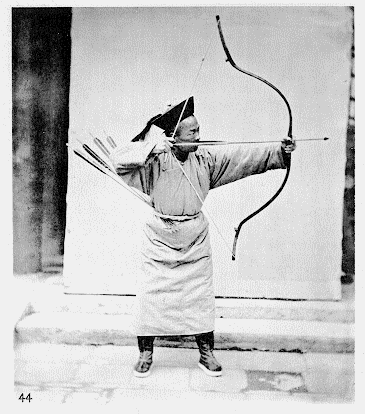 When you are having a disagreement with a family member or friend its very easy to say something that YOU know will hurt them. Its like a weapon you use.
 You don't REALLY mean it but you know that it will get to them.
You lash out.
Your hurt them.
I would compare letting these hurtful words loose to firing an arrow at the person. You can't take the words back - once you've shot them That's it. Its too late.
The arrow remains in the person causing pain.
You can't take it back once you have loosed the arrow.
Be careful in what you say to people you love. Think of your words like arrows. You can't take them back and undo the hurt they have caused. With this in mind you might not be so quick to lash out.
Remember - Your Words Are Like Arrows...
When you are having a disagreement with a family member or friend its very easy to say something that YOU know will hurt them. Its like a weapon you use. You don't REALLY mean it but you know that it will get to them.
You lash out.
Your hurt them.
I would compare letting these hurtful words loose to firing an arrow at the person. You can't take the words back - once you've shot them That's it. Its too late.
The arrow remains in the person causing pain.
You can't take it back once you have loosed the arrow.
Be careful in what you say to people you love. Think of your words like arrows. You can't take them back and undo the hurt they have caused. With this in mind you might not be so quick to lash out.
Tuesday, 1 May 2007
Calm Down and Save Lives - Drive Your Car Slower
 This is a simple tip. If you drive your car slower you will feel calmer. Seriously! Try it and see! I know it sounds very obvious but then why are there so many people driving like maniacs? Why are there so many people stressed in traffic? If you are in a traffic Jam - just shrug your shoulders and learn how to go with the flow. You will get to your destination more relaxed and most importantly you will be ALIVE!
Speeding is dangerous for everyone, It just doesn't make any sense. SLOW DOWN - its the best thing you can do for everyone!
Calm Down and Save Lives - Drive Your Car Slower
This is a simple tip. If you drive your car slower you will feel calmer. Seriously! Try it and see! I know it sounds very obvious but then why are there so many people driving like maniacs? Why are there so many people stressed in traffic? If you are in a traffic Jam - just shrug your shoulders and learn how to go with the flow. You will get to your destination more relaxed and most importantly you will be ALIVE!Speeding is dangerous for everyone, It just doesn't make any sense. SLOW DOWN - its the best thing you can do for everyone!
Friday, 13 April 2007
DON'T JUST SIT THERE - MOVE!
DON'T JUST SIT THERE - MOVE!
Photo By N. Ireland Wallpapers / Desktop Backgrounds
Quick tip for today:
While thinking about your posture at work - it is better to MOVE OFTEN than to SIT WELL.
Good Luck,
Allen
Quick tip for today:
While thinking about your posture at work - it is better to MOVE OFTEN than to SIT WELL.
Good Luck,
Allen
DON'T JUST SIT THERE - MOVE!
DON'T JUST SIT THERE - MOVE!
Photo By N. Ireland Wallpapers / Desktop Backgrounds
Quick tip for today:
While thinking about your posture at work - it is better to MOVE OFTEN than to SIT WELL.
Good Luck,
Allen
Quick tip for today:
While thinking about your posture at work - it is better to MOVE OFTEN than to SIT WELL.
Good Luck,
Allen
Tuesday, 10 April 2007
5 Tips on How to Manage Change in Your Life
5 Tips on How to Manage Change in Your Life

Photo By N. Ireland Wallpapers / Desktop Backgrounds
One of the most difficult aspects of life is handling change. Life is full of change. It could mean changing job, moving house, a new relationship, the ending of a relationship - you name it! It can be stressful but don't forget the golden rule! We can't just FEEL stressed without first THINKING about being stressed.
Here are some tips that I have gotten from self help books that have worked for ME.
1) Anticipate Change.
Change can be happening around you without you realising it! Try and anticipate change. Look at patterns or trends that are happening right now. Perhaps they may be a prelude or indicate an important change on the horizon. Let me give you an example. Here in Ireland, more and more Information Technology jobs are being moved to low cost environments in Asia. My job may be safe in the short term but is it really sustainable? What happens in a couple of years time? I can clearly see a trend so perhaps I should think about re-skilling into a profession that is not likely to be moved abroad? You get my point?
2) Plan for Change.
If we continue with the example of my kind of employment being moved to Asia - what can I do to plan for this inevitability? What options do I have? Perhaps I should think laterally or "outside the box". I have time now to adapt but how long do I have left? The way I see it one should think of planning for change like being in a game of chess. To be successful you need to be able see a few moves ahead. What are the consequences of your action today on the future? What are the consequences of INACTION on the future? What skills do I need to adapt? What are my priorities?
3) Overcome the Fear of Change.
In my experience, we humans fear change. We love being "stuck in a rut" so to speak. We get accustomed to the life we have today and get great comfort in the routine of the day to day tasks of our lives. Maybe we are adverse to taking risks equally you need to ask yourself "Am I taking a bigger risk by not changing?". Maybe we are afraid of the UNKNOWN. If this is so then we need to develop trust that everything will be ok. Look at past experiences? Has everything worked out in the end? When I knew it was time for me to move on from living in Sweden - I was afraid. I had my friends in Stockholm! I had spent 8 years of my life there. I was "used to" the way things were but I knew deep down it was time to change. I had to take the leap and trust everything was going to be OK.
4) Be Kind To Yourself During Change.
No matter how hard you try - you will most likely find change stressful. It seems to be the natural order of things. Try and be kind to yourself during times of change. Take care of your health - both physical and mental. With your physical health, take good care of your diet and make sure you get some exercise to burn of those stress hormones. For you mental health make sure you get enough sleep, enough relaxation and if you are spiritually inclined now is the time to draw on that part of your life.
5) Expect to make mistakes.
Finally - expect to make mistakes. When you are trying something new you are bound to make mistakes for the first while. When I passed my driving test I remember not only how nervous I was driving by myself but I remember how many mistakes I made. I also remember how much I learnt and an overall sense of freedom which was worth all the risks and hard work of trying to pass my driving test in a foreign country AND in a foreign language!
I hope you find these tips on managing change helpful. I certainly feel that if you take these five lessons on board you will manage change in your life. Well, perhaps better than you did before.
Good Luck,
Allen

One of the most difficult aspects of life is handling change. Life is full of change. It could mean changing job, moving house, a new relationship, the ending of a relationship - you name it! It can be stressful but don't forget the golden rule! We can't just FEEL stressed without first THINKING about being stressed.
Here are some tips that I have gotten from self help books that have worked for ME.
1) Anticipate Change.
Change can be happening around you without you realising it! Try and anticipate change. Look at patterns or trends that are happening right now. Perhaps they may be a prelude or indicate an important change on the horizon. Let me give you an example. Here in Ireland, more and more Information Technology jobs are being moved to low cost environments in Asia. My job may be safe in the short term but is it really sustainable? What happens in a couple of years time? I can clearly see a trend so perhaps I should think about re-skilling into a profession that is not likely to be moved abroad? You get my point?
2) Plan for Change.
If we continue with the example of my kind of employment being moved to Asia - what can I do to plan for this inevitability? What options do I have? Perhaps I should think laterally or "outside the box". I have time now to adapt but how long do I have left? The way I see it one should think of planning for change like being in a game of chess. To be successful you need to be able see a few moves ahead. What are the consequences of your action today on the future? What are the consequences of INACTION on the future? What skills do I need to adapt? What are my priorities?
3) Overcome the Fear of Change.
In my experience, we humans fear change. We love being "stuck in a rut" so to speak. We get accustomed to the life we have today and get great comfort in the routine of the day to day tasks of our lives. Maybe we are adverse to taking risks equally you need to ask yourself "Am I taking a bigger risk by not changing?". Maybe we are afraid of the UNKNOWN. If this is so then we need to develop trust that everything will be ok. Look at past experiences? Has everything worked out in the end? When I knew it was time for me to move on from living in Sweden - I was afraid. I had my friends in Stockholm! I had spent 8 years of my life there. I was "used to" the way things were but I knew deep down it was time to change. I had to take the leap and trust everything was going to be OK.
4) Be Kind To Yourself During Change.
No matter how hard you try - you will most likely find change stressful. It seems to be the natural order of things. Try and be kind to yourself during times of change. Take care of your health - both physical and mental. With your physical health, take good care of your diet and make sure you get some exercise to burn of those stress hormones. For you mental health make sure you get enough sleep, enough relaxation and if you are spiritually inclined now is the time to draw on that part of your life.
5) Expect to make mistakes.
Finally - expect to make mistakes. When you are trying something new you are bound to make mistakes for the first while. When I passed my driving test I remember not only how nervous I was driving by myself but I remember how many mistakes I made. I also remember how much I learnt and an overall sense of freedom which was worth all the risks and hard work of trying to pass my driving test in a foreign country AND in a foreign language!
I hope you find these tips on managing change helpful. I certainly feel that if you take these five lessons on board you will manage change in your life. Well, perhaps better than you did before.
Good Luck,
Allen
5 Tips on How to Manage Change in Your Life
5 Tips on How to Manage Change in Your Life
Photo By N. Ireland Wallpapers / Desktop Backgrounds
One of the most difficult aspects of life is handling change. Life is full of change. It could mean changing job, moving house, a new relationship, the ending of a relationship - you name it! It can be stressful but don't forget the golden rule! We can't just FEEL stressed without first THINKING about being stressed.
Here are some tips that I have gotten from self help books that have worked for ME.
1) Anticipate Change.
Change can be happening around you without you realising it! Try and anticipate change. Look at patterns or trends that are happening right now. Perhaps they may be a prelude or indicate an important change on the horizon. Let me give you an example. Here in Ireland, more and more Information Technology jobs are being moved to low cost environments in Asia. My job may be safe in the short term but is it really sustainable? What happens in a couple of years time? I can clearly see a trend so perhaps I should think about re-skilling into a profession that is not likely to be moved abroad? You get my point?
2) Plan for Change.
If we continue with the example of my kind of employment being moved to Asia - what can I do to plan for this inevitability? What options do I have? Perhaps I should think laterally or "outside the box". I have time now to adapt but how long do I have left? The way I see it one should think of planning for change like being in a game of chess. To be successful you need to be able see a few moves ahead. What are the consequences of your action today on the future? What are the consequences of INACTION on the future? What skills do I need to adapt? What are my priorities?
3) Overcome the Fear of Change.
In my experience, we humans fear change. We love being "stuck in a rut" so to speak. We get accustomed to the life we have today and get great comfort in the routine of the day to day tasks of our lives. Maybe we are adverse to taking risks equally you need to ask yourself "Am I taking a bigger risk by not changing?". Maybe we are afraid of the UNKNOWN. If this is so then we need to develop trust that everything will be ok. Look at past experiences? Has everything worked out in the end? When I knew it was time for me to move on from living in Sweden - I was afraid. I had my friends in Stockholm! I had spent 8 years of my life there. I was "used to" the way things were but I knew deep down it was time to change. I had to take the leap and trust everything was going to be OK.
4) Be Kind To Yourself During Change.
No matter how hard you try - you will most likely find change stressful. It seems to be the natural order of things. Try and be kind to yourself during times of change. Take care of your health - both physical and mental. With your physical health, take good care of your diet and make sure you get some exercise to burn of those stress hormones. For you mental health make sure you get enough sleep, enough relaxation and if you are spiritually inclined now is the time to draw on that part of your life.
5) Expect to make mistakes.
Finally - expect to make mistakes. When you are trying something new you are bound to make mistakes for the first while. When I passed my driving test I remember not only how nervous I was driving by myself but I remember how many mistakes I made. I also remember how much I learnt and an overall sense of freedom which was worth all the risks and hard work of trying to pass my driving test in a foreign country AND in a foreign language!
I hope you find these tips on managing change helpful. I certainly feel that if you take these five lessons on board you will manage change in your life. Well, perhaps better than you did before.
Good Luck,
Allen
One of the most difficult aspects of life is handling change. Life is full of change. It could mean changing job, moving house, a new relationship, the ending of a relationship - you name it! It can be stressful but don't forget the golden rule! We can't just FEEL stressed without first THINKING about being stressed.
Here are some tips that I have gotten from self help books that have worked for ME.
1) Anticipate Change.
Change can be happening around you without you realising it! Try and anticipate change. Look at patterns or trends that are happening right now. Perhaps they may be a prelude or indicate an important change on the horizon. Let me give you an example. Here in Ireland, more and more Information Technology jobs are being moved to low cost environments in Asia. My job may be safe in the short term but is it really sustainable? What happens in a couple of years time? I can clearly see a trend so perhaps I should think about re-skilling into a profession that is not likely to be moved abroad? You get my point?
2) Plan for Change.
If we continue with the example of my kind of employment being moved to Asia - what can I do to plan for this inevitability? What options do I have? Perhaps I should think laterally or "outside the box". I have time now to adapt but how long do I have left? The way I see it one should think of planning for change like being in a game of chess. To be successful you need to be able see a few moves ahead. What are the consequences of your action today on the future? What are the consequences of INACTION on the future? What skills do I need to adapt? What are my priorities?
3) Overcome the Fear of Change.
In my experience, we humans fear change. We love being "stuck in a rut" so to speak. We get accustomed to the life we have today and get great comfort in the routine of the day to day tasks of our lives. Maybe we are adverse to taking risks equally you need to ask yourself "Am I taking a bigger risk by not changing?". Maybe we are afraid of the UNKNOWN. If this is so then we need to develop trust that everything will be ok. Look at past experiences? Has everything worked out in the end? When I knew it was time for me to move on from living in Sweden - I was afraid. I had my friends in Stockholm! I had spent 8 years of my life there. I was "used to" the way things were but I knew deep down it was time to change. I had to take the leap and trust everything was going to be OK.
4) Be Kind To Yourself During Change.
No matter how hard you try - you will most likely find change stressful. It seems to be the natural order of things. Try and be kind to yourself during times of change. Take care of your health - both physical and mental. With your physical health, take good care of your diet and make sure you get some exercise to burn of those stress hormones. For you mental health make sure you get enough sleep, enough relaxation and if you are spiritually inclined now is the time to draw on that part of your life.
5) Expect to make mistakes.
Finally - expect to make mistakes. When you are trying something new you are bound to make mistakes for the first while. When I passed my driving test I remember not only how nervous I was driving by myself but I remember how many mistakes I made. I also remember how much I learnt and an overall sense of freedom which was worth all the risks and hard work of trying to pass my driving test in a foreign country AND in a foreign language!
I hope you find these tips on managing change helpful. I certainly feel that if you take these five lessons on board you will manage change in your life. Well, perhaps better than you did before.
Good Luck,
Allen
Tuesday, 6 March 2007
How to take Micropauses
Hi Everyone,
A micropause is a very short break that one can take when working at your desk or computer. It is a very important method of reducing the chances of developing an occupational injury at work. About a year ago I had to go on sick leave as my neck had frozen due to sitting at my desk for long periods without taking the appropriate breaks. A micropause need only be 20-30 secs and could involve looking away from your computer or carrying out some simple stretching exercises. I will write more on this later.
In the mean time check out http://www.cheqsoft.com/break.html . I have been using this tool and it really helps me manage the micropauses and longer breaks. I need something to FORCE me to take the breaks! The demo is free to download and as far as I can see you can keep using it without having to pay for it. Although you need to restart it daily to keep using it.
Give it a whirl and let me know what you think!
Allen
A micropause is a very short break that one can take when working at your desk or computer. It is a very important method of reducing the chances of developing an occupational injury at work. About a year ago I had to go on sick leave as my neck had frozen due to sitting at my desk for long periods without taking the appropriate breaks. A micropause need only be 20-30 secs and could involve looking away from your computer or carrying out some simple stretching exercises. I will write more on this later.
In the mean time check out http://www.cheqsoft.com/break.html . I have been using this tool and it really helps me manage the micropauses and longer breaks. I need something to FORCE me to take the breaks! The demo is free to download and as far as I can see you can keep using it without having to pay for it. Although you need to restart it daily to keep using it.
Give it a whirl and let me know what you think!
Allen
How to take Micropauses
Hi Everyone,
A micropause is a very short break that one can take when working at your desk or computer. It is a very important method of reducing the chances of developing an occupational injury at work. About a year ago I had to go on sick leave as my neck had frozen due to sitting at my desk for long periods without taking the appropriate breaks. A micropause need only be 20-30 secs and could involve looking away from your computer or carrying out some simple stretching exercises. I will write more on this later.
In the mean time check out http://www.cheqsoft.com/break.html . I have been using this tool and it really helps me manage the micropauses and longer breaks. I need something to FORCE me to take the breaks! The demo is free to download and as far as I can see you can keep using it without having to pay for it. Although you need to restart it daily to keep using it.
Give it a whirl and let me know what you think!
Allen
A micropause is a very short break that one can take when working at your desk or computer. It is a very important method of reducing the chances of developing an occupational injury at work. About a year ago I had to go on sick leave as my neck had frozen due to sitting at my desk for long periods without taking the appropriate breaks. A micropause need only be 20-30 secs and could involve looking away from your computer or carrying out some simple stretching exercises. I will write more on this later.
In the mean time check out http://www.cheqsoft.com/break.html . I have been using this tool and it really helps me manage the micropauses and longer breaks. I need something to FORCE me to take the breaks! The demo is free to download and as far as I can see you can keep using it without having to pay for it. Although you need to restart it daily to keep using it.
Give it a whirl and let me know what you think!
Allen
Friday, 2 March 2007
The Beginner's Mind.
Hi there,
This is a very useful technique when it comes to learning.
To quote wikipedia:
Shoshin (also pronounced nyuanshin) is a concept in Zen Buddhism meaning Beginner's Mind. It refers to having an attitude of openness, eagerness, and lack of preconceptions when studying a subject, even when studying at an advanced level, just as a beginner in that subject would. The term is especially used in the study of Zen Buddhism and Japanese martial arts.
The phrase was also used as the title of Zen teacher Shunryu Suzuki's book: Zen Mind, Beginner's Mind, which reflects a saying of his regarding the way to approach Zen practice: In the beginner's mind there are many possibilities, in the expert's mind there are few.
You can apply this in real life by approaching a subject with the mind of a beginner even if you feel you are already an expert! I remember such an example when I worked as a computer programmer. I had worked on a particular system for a few years and I really felt that "I knew it all". To be perfectly honest - I was a little bit arrogant about it! I then moved to another company who really pushed the system to it limits. I had a difficult time as I thought I knew it all and I was making lots of mistakes and my colleagues were surprised as they thought I knew it all too! If I had approached this new company with a "beginners mind", being honest with myself about what I actually knew, I would have caused less conflict and learnt much faster.
This technique can be applied in lots of areas of your life. Give it a go and you will be impressed by how much you will learn about the subject you are studying and yourself!
Good Luck,
Allen
This is a very useful technique when it comes to learning.
To quote wikipedia:
Shoshin (also pronounced nyuanshin) is a concept in Zen Buddhism meaning Beginner's Mind. It refers to having an attitude of openness, eagerness, and lack of preconceptions when studying a subject, even when studying at an advanced level, just as a beginner in that subject would. The term is especially used in the study of Zen Buddhism and Japanese martial arts.
The phrase was also used as the title of Zen teacher Shunryu Suzuki's book: Zen Mind, Beginner's Mind, which reflects a saying of his regarding the way to approach Zen practice: In the beginner's mind there are many possibilities, in the expert's mind there are few.
You can apply this in real life by approaching a subject with the mind of a beginner even if you feel you are already an expert! I remember such an example when I worked as a computer programmer. I had worked on a particular system for a few years and I really felt that "I knew it all". To be perfectly honest - I was a little bit arrogant about it! I then moved to another company who really pushed the system to it limits. I had a difficult time as I thought I knew it all and I was making lots of mistakes and my colleagues were surprised as they thought I knew it all too! If I had approached this new company with a "beginners mind", being honest with myself about what I actually knew, I would have caused less conflict and learnt much faster.
This technique can be applied in lots of areas of your life. Give it a go and you will be impressed by how much you will learn about the subject you are studying and yourself!
Good Luck,
Allen
The Beginner's Mind.
Hi there,
This is a very useful technique when it comes to learning.
To quote wikipedia:
Shoshin (also pronounced nyuanshin) is a concept in Zen Buddhism meaning Beginner's Mind. It refers to having an attitude of openness, eagerness, and lack of preconceptions when studying a subject, even when studying at an advanced level, just as a beginner in that subject would. The term is especially used in the study of Zen Buddhism and Japanese martial arts.
The phrase was also used as the title of Zen teacher Shunryu Suzuki's book: Zen Mind, Beginner's Mind, which reflects a saying of his regarding the way to approach Zen practice: In the beginner's mind there are many possibilities, in the expert's mind there are few.
You can apply this in real life by approaching a subject with the mind of a beginner even if you feel you are already an expert! I remember such an example when I worked as a computer programmer. I had worked on a particular system for a few years and I really felt that "I knew it all". To be perfectly honest - I was a little bit arrogant about it! I then moved to another company who really pushed the system to it limits. I had a difficult time as I thought I knew it all and I was making lots of mistakes and my colleagues were surprised as they thought I knew it all too! If I had approached this new company with a "beginners mind", being honest with myself about what I actually knew, I would have caused less conflict and learnt much faster.
This technique can be applied in lots of areas of your life. Give it a go and you will be impressed by how much you will learn about the subject you are studying and yourself!
Good Luck,
Allen
This is a very useful technique when it comes to learning.
To quote wikipedia:
Shoshin (also pronounced nyuanshin) is a concept in Zen Buddhism meaning Beginner's Mind. It refers to having an attitude of openness, eagerness, and lack of preconceptions when studying a subject, even when studying at an advanced level, just as a beginner in that subject would. The term is especially used in the study of Zen Buddhism and Japanese martial arts.
The phrase was also used as the title of Zen teacher Shunryu Suzuki's book: Zen Mind, Beginner's Mind, which reflects a saying of his regarding the way to approach Zen practice: In the beginner's mind there are many possibilities, in the expert's mind there are few.
You can apply this in real life by approaching a subject with the mind of a beginner even if you feel you are already an expert! I remember such an example when I worked as a computer programmer. I had worked on a particular system for a few years and I really felt that "I knew it all". To be perfectly honest - I was a little bit arrogant about it! I then moved to another company who really pushed the system to it limits. I had a difficult time as I thought I knew it all and I was making lots of mistakes and my colleagues were surprised as they thought I knew it all too! If I had approached this new company with a "beginners mind", being honest with myself about what I actually knew, I would have caused less conflict and learnt much faster.
This technique can be applied in lots of areas of your life. Give it a go and you will be impressed by how much you will learn about the subject you are studying and yourself!
Good Luck,
Allen
Friday, 23 February 2007
How To Stop All or Nothing Thinking - Speak in E-Prime
Hi there,
Many people find all or nothing thinking - also known as binary thinking - a common issue when dealing with cognitive distortions.
I have noted that many people find that speaking in E-Prime may reduce the tendency to label situations and people into certain categories.
From Wikipedia:
E- Prime attempts to remove the verb “to be” in all its forms from English: be, is, am, are, was, were, been and being, plus all the contractions. This has the tactical effect of eliminating the passive voice. According to proponents, it forces the writer (or speaker) to think differently, and often results in language that most people find easier to read. Some call E-Prime a variant of the English language, while others approach it like a mental discipline to filter their own speech and translate the speech of others. For example, the grammatical construct changes “The movie was good.” to “I liked the movie.” Telling someone “the movie was good” imparts the state of goodness to the movie, rather than communicating the subjective nature of one's experience of the movie.
E-Prime forces a writer to choose verbs and meanings carefully: the elimination of "to be" implicitly eliminates the passive voice and progressive aspect. Some defective verbs, such as "can", use paraphrases involving "to be" in some tenses and moods. This constraint alone accounts for much of the appeal of E-Prime to some of its advocates, since many stylists argue that such constructions occur too frequently in sloppy English writing. Of course it may also generate difficulties for some writers as they learn to use E-Prime.
An example of how E-Prime might work.
So the short poem:
Roses are red;
Violets are blue.
Honey is sweet,
And so are you.
One possible translation in E-prime:
Roses appear red;
Violets seem blue.
Honey tastes sweet,
And you please me too.
To use this tip, simply eliminate all uses of the verb "to be" from your communication for a given period of time, whether an hour, a day, or the time it takes you to write an email that you fear will turn into a flame.
I have indeed found this technique useful when I wish to speak in a diplomatic tone such as in a meeting
In my experience - I have found this technique useful to illustrate how people possibly label situations by using words such as:
be
being
been
am
is; isn't
are; aren't
was; wasn't
were; weren't
An example:
"That is a spaceship!"
In E-prime:
"That certainly looks like a spaceship to me." (Implication: it merits further investigation. What does it look like to you?)
You could go to http://en.wikipedia.org/wiki/E-prime as a place to learn more about E-Prime.
Good Luck,
Allen
P.S. I wrote this article entirely in E-Prime, except for the examples.
Many people find all or nothing thinking - also known as binary thinking - a common issue when dealing with cognitive distortions.
I have noted that many people find that speaking in E-Prime may reduce the tendency to label situations and people into certain categories.
From Wikipedia:
E- Prime attempts to remove the verb “to be” in all its forms from English: be, is, am, are, was, were, been and being, plus all the contractions. This has the tactical effect of eliminating the passive voice. According to proponents, it forces the writer (or speaker) to think differently, and often results in language that most people find easier to read. Some call E-Prime a variant of the English language, while others approach it like a mental discipline to filter their own speech and translate the speech of others. For example, the grammatical construct changes “The movie was good.” to “I liked the movie.” Telling someone “the movie was good” imparts the state of goodness to the movie, rather than communicating the subjective nature of one's experience of the movie.
E-Prime forces a writer to choose verbs and meanings carefully: the elimination of "to be" implicitly eliminates the passive voice and progressive aspect. Some defective verbs, such as "can", use paraphrases involving "to be" in some tenses and moods. This constraint alone accounts for much of the appeal of E-Prime to some of its advocates, since many stylists argue that such constructions occur too frequently in sloppy English writing. Of course it may also generate difficulties for some writers as they learn to use E-Prime.
An example of how E-Prime might work.
So the short poem:
Roses are red;
Violets are blue.
Honey is sweet,
And so are you.
One possible translation in E-prime:
Roses appear red;
Violets seem blue.
Honey tastes sweet,
And you please me too.
To use this tip, simply eliminate all uses of the verb "to be" from your communication for a given period of time, whether an hour, a day, or the time it takes you to write an email that you fear will turn into a flame.
I have indeed found this technique useful when I wish to speak in a diplomatic tone such as in a meeting
In my experience - I have found this technique useful to illustrate how people possibly label situations by using words such as:
be
being
been
am
is; isn't
are; aren't
was; wasn't
were; weren't
An example:
"That is a spaceship!"
In E-prime:
"That certainly looks like a spaceship to me." (Implication: it merits further investigation. What does it look like to you?)
You could go to http://en.wikipedia.org/wiki/E-prime as a place to learn more about E-Prime.
Good Luck,
Allen
P.S. I wrote this article entirely in E-Prime, except for the examples.
How To Stop All or Nothing Thinking - Speak in E-Prime
Hi there,
Many people find all or nothing thinking - also known as binary thinking - a common issue when dealing with cognitive distortions.
I have noted that many people find that speaking in E-Prime may reduce the tendency to label situations and people into certain categories.
From Wikipedia:
E- Prime attempts to remove the verb “to be” in all its forms from English: be, is, am, are, was, were, been and being, plus all the contractions. This has the tactical effect of eliminating the passive voice. According to proponents, it forces the writer (or speaker) to think differently, and often results in language that most people find easier to read. Some call E-Prime a variant of the English language, while others approach it like a mental discipline to filter their own speech and translate the speech of others. For example, the grammatical construct changes “The movie was good.” to “I liked the movie.” Telling someone “the movie was good” imparts the state of goodness to the movie, rather than communicating the subjective nature of one's experience of the movie.
E-Prime forces a writer to choose verbs and meanings carefully: the elimination of "to be" implicitly eliminates the passive voice and progressive aspect. Some defective verbs, such as "can", use paraphrases involving "to be" in some tenses and moods. This constraint alone accounts for much of the appeal of E-Prime to some of its advocates, since many stylists argue that such constructions occur too frequently in sloppy English writing. Of course it may also generate difficulties for some writers as they learn to use E-Prime.
An example of how E-Prime might work.
So the short poem:
Roses are red;
Violets are blue.
Honey is sweet,
And so are you.
One possible translation in E-prime:
Roses appear red;
Violets seem blue.
Honey tastes sweet,
And you please me too.
To use this tip, simply eliminate all uses of the verb "to be" from your communication for a given period of time, whether an hour, a day, or the time it takes you to write an email that you fear will turn into a flame.
I have indeed found this technique useful when I wish to speak in a diplomatic tone such as in a meeting
In my experience - I have found this technique useful to illustrate how people possibly label situations by using words such as:
be
being
been
am
is; isn't
are; aren't
was; wasn't
were; weren't
An example:
"That is a spaceship!"
In E-prime:
"That certainly looks like a spaceship to me." (Implication: it merits further investigation. What does it look like to you?)
You could go to http://en.wikipedia.org/wiki/E-prime as a place to learn more about E-Prime.
Good Luck,
Allen
P.S. I wrote this article entirely in E-Prime, except for the examples.
Many people find all or nothing thinking - also known as binary thinking - a common issue when dealing with cognitive distortions.
I have noted that many people find that speaking in E-Prime may reduce the tendency to label situations and people into certain categories.
From Wikipedia:
E- Prime attempts to remove the verb “to be” in all its forms from English: be, is, am, are, was, were, been and being, plus all the contractions. This has the tactical effect of eliminating the passive voice. According to proponents, it forces the writer (or speaker) to think differently, and often results in language that most people find easier to read. Some call E-Prime a variant of the English language, while others approach it like a mental discipline to filter their own speech and translate the speech of others. For example, the grammatical construct changes “The movie was good.” to “I liked the movie.” Telling someone “the movie was good” imparts the state of goodness to the movie, rather than communicating the subjective nature of one's experience of the movie.
E-Prime forces a writer to choose verbs and meanings carefully: the elimination of "to be" implicitly eliminates the passive voice and progressive aspect. Some defective verbs, such as "can", use paraphrases involving "to be" in some tenses and moods. This constraint alone accounts for much of the appeal of E-Prime to some of its advocates, since many stylists argue that such constructions occur too frequently in sloppy English writing. Of course it may also generate difficulties for some writers as they learn to use E-Prime.
An example of how E-Prime might work.
So the short poem:
Roses are red;
Violets are blue.
Honey is sweet,
And so are you.
One possible translation in E-prime:
Roses appear red;
Violets seem blue.
Honey tastes sweet,
And you please me too.
To use this tip, simply eliminate all uses of the verb "to be" from your communication for a given period of time, whether an hour, a day, or the time it takes you to write an email that you fear will turn into a flame.
I have indeed found this technique useful when I wish to speak in a diplomatic tone such as in a meeting
In my experience - I have found this technique useful to illustrate how people possibly label situations by using words such as:
be
being
been
am
is; isn't
are; aren't
was; wasn't
were; weren't
An example:
"That is a spaceship!"
In E-prime:
"That certainly looks like a spaceship to me." (Implication: it merits further investigation. What does it look like to you?)
You could go to http://en.wikipedia.org/wiki/E-prime as a place to learn more about E-Prime.
Good Luck,
Allen
P.S. I wrote this article entirely in E-Prime, except for the examples.
Thursday, 15 February 2007
A Simple Way to Re-generate our Cities...
Hi Everyone..
In the spirit of self help for lazy people here is a small tip I overheard someone talking about.
In order to brighten our environment - all we need to do is scatter seeds. When you go for a walk take some seeds with you - use seeds from a good hearty plant. Plant them among the weeds or in patches of waste land and wait and see what happens.
Simple but beautiful.
Allen
In the spirit of self help for lazy people here is a small tip I overheard someone talking about.
In order to brighten our environment - all we need to do is scatter seeds. When you go for a walk take some seeds with you - use seeds from a good hearty plant. Plant them among the weeds or in patches of waste land and wait and see what happens.
Simple but beautiful.
Allen
A Simple Way to Re-generate our Cities...
Hi Everyone..
In the spirit of self help for lazy people here is a small tip I overheard someone talking about.
In order to brighten our environment - all we need to do is scatter seeds. When you go for a walk take some seeds with you - use seeds from a good hearty plant. Plant them among the weeds or in patches of waste land and wait and see what happens.
Simple but beautiful.
Allen
In the spirit of self help for lazy people here is a small tip I overheard someone talking about.
In order to brighten our environment - all we need to do is scatter seeds. When you go for a walk take some seeds with you - use seeds from a good hearty plant. Plant them among the weeds or in patches of waste land and wait and see what happens.
Simple but beautiful.
Allen
Subscribe to:
Posts (Atom)
Subscribe To


 Posts
All Comments
Posts
All Comments